
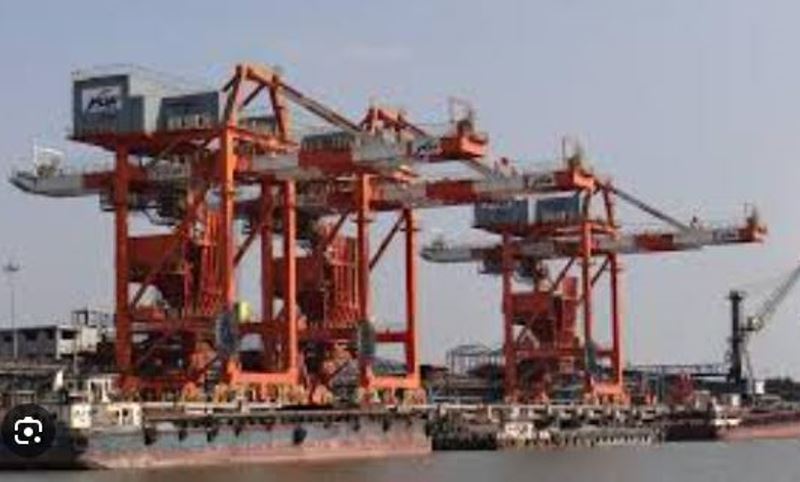
JSW Infrastructure’s ₹600-crore mechanisation project at the V.O. Chidambaranar (VOC) Port is on track for completion by the fourth quarter of the current financial year, significantly enhancing the port’s dry bulk cargo handling capabilities and operational efficiency.
The project involves the mechanisation of North Cargo Berth-III (NCB-III) with an annual handling capacity of 7 million tonnes (MTPA). Once commissioned, the state-of-the-art facility is expected to improve cargo evacuation, reduce vessel turnaround time and enable the port to accommodate larger dry bulk vessels.
According to the company’s latest investor presentation, civil works for the conveyor system have been completed, while building-related civil works are currently in progress.
JSW Infrastructure signed the concession agreement with the VOC Port Authority in July 2024 for the project, which is being developed under the Design, Build, Finance, Operate and Transfer (DBFOT) model with a 30-year concession period.
The mechanised terminal has been designed to handle a wide range of dry bulk commodities, including coal, coke, limestone, gypsum, rock phosphate and copper concentrate. Credit rating agency ICRA had earlier estimated the terminal’s handling capacity at around 7 MTPA.
Upon completion, the project will increase JSW Infrastructure’s total bulk cargo handling capacity in Tamil Nadu to 20 MTPA. The company already operates an 11 MTPA coal terminal and a 2 MTPA bulk cargo terminal at Ennore Port near Chennai.
While the mechanisation work is underway, the terminal is currently operating on an interim basis using two mobile harbour cranes and handled 1.39 million tonnes of cargo during the first quarter of FY2026-27, according to the company.
Industry stakeholders believe the mechanised facility will strengthen VOC Port’s position as a major dry bulk gateway on India’s east coast.
A senior executive from a leading shipping company based in Thoothukudi said the project would significantly improve dry bulk cargo handling efficiency and help the port attract larger vessels, delivering substantial benefits to both importers and exporters. The mechanisation is also expected to support higher cargo throughput while enhancing overall port productivity.