
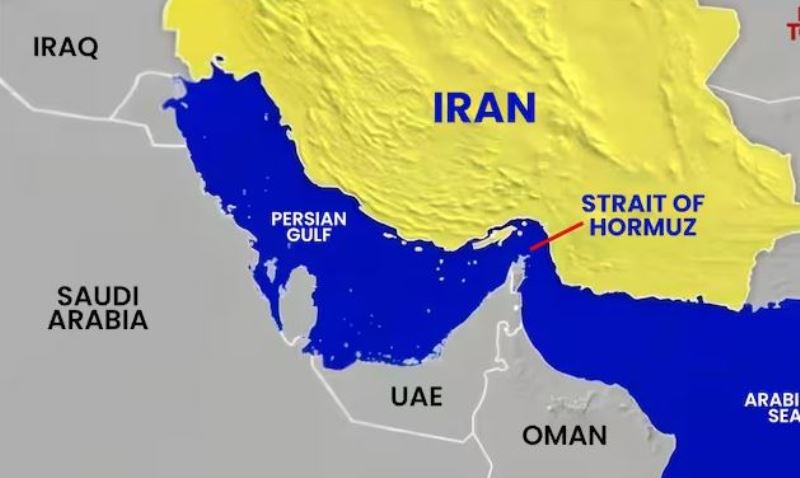
India’s exports to countries around the Strait of Hormuz have come under increasing pressure as the ongoing Iran-US conflict disrupts trade flows and complicates shipping through the strategically important waterway.
India’s exports to seven Hormuz-linked economies — Bahrain, Kuwait, Iran, Iraq, Qatar, Saudi Arabia and the UAE — fell 16.9% year-on-year to $11.4 billion in the April-June quarter of FY27, compared with $13.7 billion a year earlier. The decline came despite India’s overall merchandise exports rising to about $129.5 billion during the quarter.
An analysis of 815 commodity lines found that 466 recorded declines in exports to the seven markets. Their combined export value fell to around $5 billion from $8.3 billion, highlighting the scale of the disruption.
More significantly, about $3.1 billion worth of these exports also declined in markets outside the Hormuz region. This suggests that redirecting shipments to alternative destinations could prove difficult for a substantial portion of affected goods.
Several major export categories have been affected. India’s diamond exports to the seven markets fell by around $115 million, while gold jewellery exports declined by about $224 million. Parboiled rice shipments dropped by approximately $335 million, with parboiled basmati rice exports to the region falling 55% year-on-year.
However, some exporters have managed to compensate for weaker Gulf demand by expanding sales in other markets. Aluminium wire exports to the Hormuz economies plunged 95.5%, but India’s overall exports of the product increased 41.7%. Similar trends were recorded for motor gasoline and aviation turbine fuel.
The disruption is also increasing logistics challenges, with alternative routes potentially involving longer transit times and higher freight costs. The Strait of Hormuz has remained a critical vulnerability for regional trade, while Gulf countries are increasingly exploring alternative ports and transport corridors to reduce dependence on the waterway.
Despite the regional disruption, India’s broader export performance has remained resilient. Goods exports grew 15% year-on-year to $129.32 billion in the first quarter of FY27, supported by strong non-oil and non-gold shipments.
For Indian exporters, the immediate challenge will be to diversify markets and logistics routes while managing higher transportation costs and uncertainty over the duration of the Hormuz disruption.