
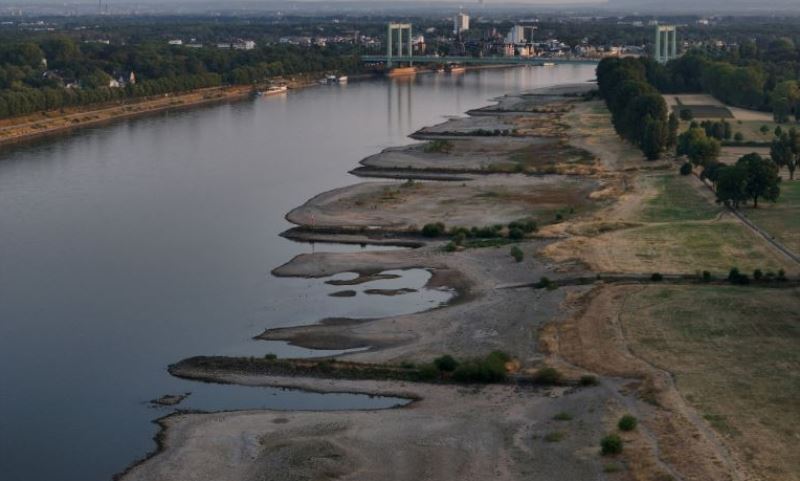
Extremely low water levels on Germany’s Rhine River are disrupting inland shipping and pushing freight costs higher, adding pressure to supply chains across central Europe.
The water level at Kaub, a critical measurement point on the Middle Rhine, fell below a key shipping threshold over the weekend. The level reached around 3 centimetres below the benchmark before recovering slightly, according to Germany’s Federal Waterways and Shipping Administration.
The low-water conditions are restricting the amount of cargo that barges can safely carry. Operators are being forced to sail with reduced loads, meaning more vessels are required to move the same volume of goods. This is increasing transportation costs and reducing effective capacity along one of Europe’s most important inland waterways.
Freight rates have responded sharply. The cost of moving diesel from Rotterdam to Karlsruhe increased by around 15% on September 28, following more than a doubling during September as dry conditions persisted.
Earlier in September, tanker freight from Rotterdam to Karlsruhe had already risen to about €165–€170 per tonne, compared with around €100 per tonne a week earlier, according to market participants cited by Reuters.
The Rhine is a major transport corridor for energy products, chemicals, metals, minerals and other industrial commodities. Its importance to European manufacturing means prolonged restrictions can create additional logistics bottlenecks and raise delivered costs for industries located along the river.
Companies are increasingly turning to road and rail services to compensate for reduced barge capacity. However, alternative modes cannot fully replace the volume normally carried by inland waterways and can involve higher transportation costs.
Shipping and logistics companies have also introduced or maintained low-water surcharges as the conditions have deteriorated. Maersk has warned that very low levels at Kaub and other Rhine measurement points can impose draft restrictions and affect loading guarantees for barge shipments.
The continuing disruption highlights the vulnerability of European inland logistics to prolonged periods of low rainfall and drought. With the Rhine serving as a critical link between major ports and industrial centres, any extended restriction on navigation could continue to raise transport costs and put additional pressure on regional supply chains.