
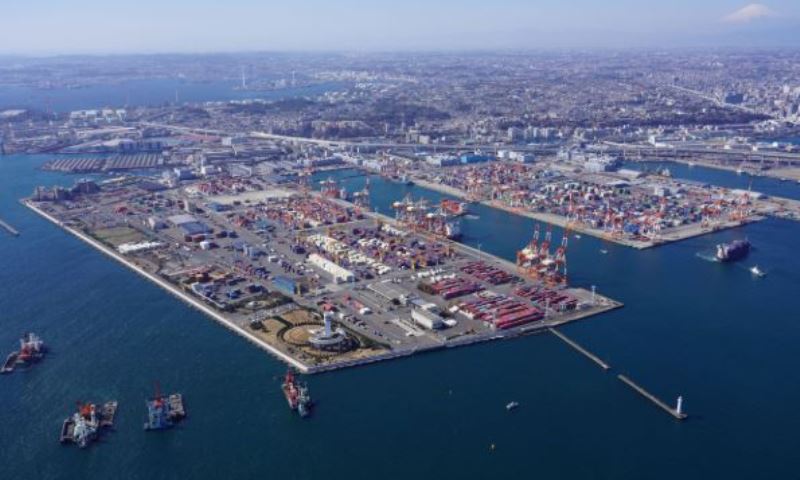
The Port of Yokohama recorded a 4.8% year-on-year increase in container throughput during January–June 2026, handling approximately 1.61 million TEUs, according to preliminary statistics released by the Yokohama municipal government. The growth marked the sixth consecutive year of expansion in first-half container volumes.
The port handled around 1.61 million TEUs, including domestic and international containers, the highest first-half volume in 16 years. Domestic container traffic also reached a record level, highlighting the port’s growing role in Japan’s coastal logistics network.
Despite the rise in container volumes, total cargo handled by the port declined 0.5% year on year to 49.89 million tonnes. Containerised cargo tonnage, however, increased 5.3% to 24.07 million tonnes during the period.
The municipal government attributed the growth in container traffic to improvements in terminal infrastructure, expanded shipping services and efforts to attract additional cargo. Upgrades to accommodate ultra-large container vessels have also supported the port’s ability to handle international and domestic shipments.
Yokohama is one of Japan’s key international gateways, connecting exporters and importers with major global markets. Its container terminals handle a range of manufactured goods, industrial products and consumer cargo, while domestic services support distribution between Japanese ports.
The latest figures underline the importance of infrastructure investment and service development in sustaining container growth. However, the decline in overall cargo tonnage suggests that performance varies across cargo categories.
The port’s continued container growth is expected to support its position in Japan’s maritime logistics network as shipping operators and cargo owners respond to changing trade demand.