
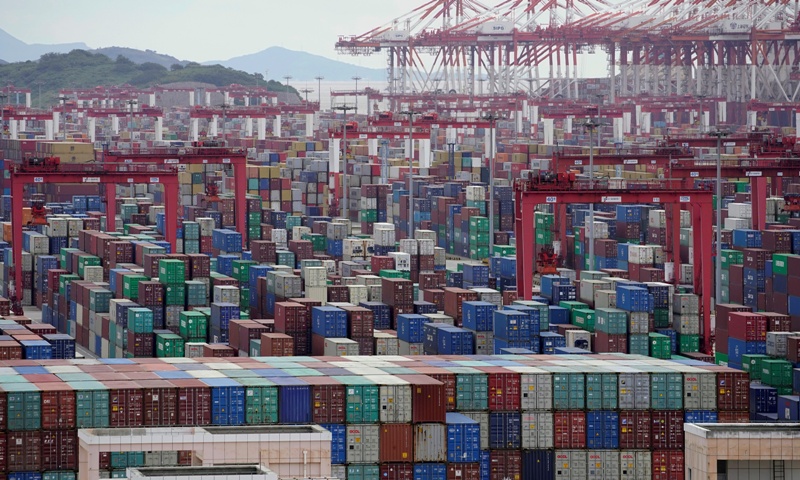
The container throughput of Chinese ports rose to 161.8 million TEU in the first half of 2024, a year-on-year (YoY) increase of 8.5 per cent.
Among them, container throughput at Shanghai Port hit 25.5 million TEU, rising 7.5 per cent YoY.
Similarly, the container throughput of Ningbo Zhoushan Port was 19.2 million TEU, a YoY increase of 8.4 per cent.
Among the top-performing Chinese ports, Beibu Gulf Port achieved a notable YoY growth rate of 19.8 per cent, increasing its total container volume to 4.3 million TEU in the first half of the year.
Conversely, the Port of Xiamen experienced a 3.9 per cent dip in container volumes, resulting in a total throughput of 5.9 million TEU.
In terms of container freight rates, the average value of the Ningbo Containerized Freight Index (NCFI) was 2780.2 points in July 2024, a month-on-month increase of 2.2 per cent and a year-on-year increase of 308.9 per cent.
Among the 21 routes, the freight index of 16 routes increased month-on-month, and the freight index of 5 routes fell month-on-month.
Earlier this month, A.P. Moller-Maersk (Maersk) inaugurated a new ocean shipping route between China and Bangladesh to address increasing trade demand, particularly in the retail sector.