
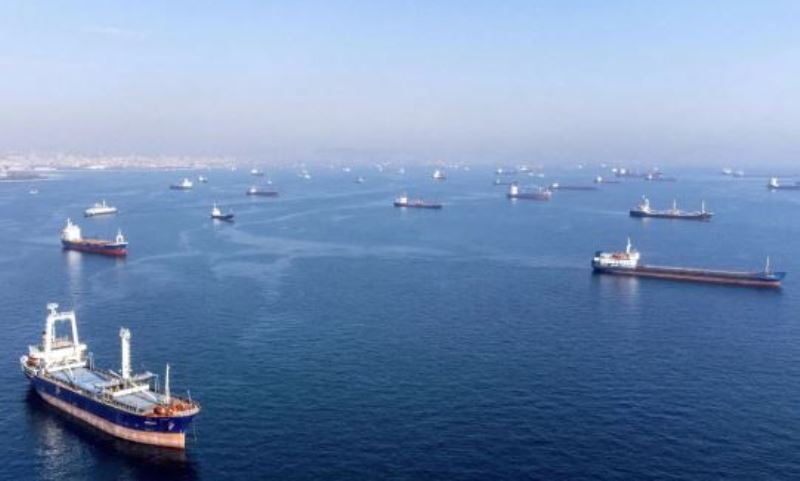
Rising bunker fuel costs and supply chain disruptions are driving freight rates higher, raising concerns over inflation and global trade flows.
The cost of shipping containers from Asia to the United States has nearly doubled since the outbreak of the Iran conflict, as surging fuel prices and a rush by importers to secure cargo space continue to drive freight rates upward.
Industry analysts warn that the sharp increase in ocean freight costs reflects growing concerns over a prolonged energy crisis and could add further inflationary pressure to the U.S. economy.
“If you want to know how seriously to take the threat of an energy crisis, look at container shipping rather than oil markets because the risk is priced into spiraling freight rates far more clearly,” said Peter Sand, Chief Analyst at freight intelligence platform Xeneta.
The developments present another challenge for the administration of U.S. President Donald Trump, as the conflict with Iran continues to disrupt global energy markets. U.S. Energy Secretary Chris Wright recently acknowledged that a lasting reduction in fuel prices will require a resolution that restores oil flows through the Strait of Hormuz.
Freight Rates Surge
According to the latest Drewry World Container Index (WCI), the spot rate for shipping a 40-foot container from Shanghai to Los Angeles reached US$4,565 this week, while the Shanghai–New York route climbed to US$5,505.
Data from both Drewry and Xeneta indicate that Asia–U.S. spot rates have increased by almost 100% since late February, when hostilities began. Although significantly higher than earlier this year, rates remain below the record highs of more than US$16,000 per container seen during the COVID-19 pandemic.
Bunker Fuel Costs Drive Market Volatility
More than 100 days into the conflict, disruptions to oil flows through the Strait of Hormuz—normally responsible for nearly 20% of global oil supply—have significantly impacted marine fuel markets.
While widespread shortages of bunker fuel have not yet emerged, reduced availability and shifting supply patterns have pushed prices sharply higher. According to marine fuel price publisher Ship & Bunker, the cost of very-low-sulfur fuel oil (VLSFO) has risen 55% across major global bunkering hubs since the conflict began.
Fuel prices vary considerably by location:
- Fujairah (UAE): US$1,211 per tonne
- Los Angeles: US$918 per tonne
- Singapore: US$770.50 per tonne
- Rotterdam: US$676 per tonne
Bunker fuel can account for up to 60% of a container vessel’s voyage costs, meaning even moderate increases can have a substantial impact on freight pricing.
“If Hormuz remains closed or only partially usable into the second half of 2026, shortages are to be expected—not necessarily everywhere, but in key grades and key locations,” said Gisele Widdershoven, Founder of maritime and energy advisory firm Blue Water Strategy.
Sea-Intelligence Maritime Analysis estimates that the Middle East conflict has already added approximately US$5.5 billion in bunker fuel expenses to the container shipping sector since late February. German carrier Hapag-Lloyd alone is reportedly spending up to US$50 million more per week on fuel compared to pre-conflict levels.
Major container lines, including MSC, Maersk, CMA CGM and Hapag-Lloyd, have introduced emergency fuel surcharges on spot cargoes, with many expected to incorporate higher fuel costs into annual customer contracts from July.
“Importers are once again racing the clock” to avoid further cost increases, said Steve Hughes, CEO of supply chain consultancy HCS International.
Manufacturing Sector Faces Growing Pressure
Beyond shipping costs, the fuel disruptions are beginning to affect manufacturing operations across Asia.
According to Zac Rogers, lead author of the Logistics Managers’ Index, higher energy costs could reduce industrial output and limit the availability of products destined for U.S. markets.
“There will be less fuel for moving ships around, as well as less fuel to run the factories that are generating the components that are filling these ships up,” Rogers said.
Manufacturers dependent on petroleum-based inputs are already taking precautionary measures. Automotive suppliers, for example, are increasing inventories of raw materials used in plastics and resins to protect against future shortages.
Across South and Southeast Asia, replacing Middle Eastern crude oil and natural gas derivatives is becoming increasingly expensive, raising production costs for products ranging from synthetic textiles to plastic packaging.
Henning Gloystein, Managing Director for Energy, Climate and Resources at Eurasia Group, warned that some factories may face difficult choices between operating at a loss or temporarily suspending production. He also noted that regional feeder services—which transport cargo from manufacturing hubs to major export ports—could be reduced as carriers prioritize fuel for more profitable long-haul routes.
“There is a fuel shortage by cost rather than by supply,” Gloystein said. “The effect is the same.”
Outlook
With no immediate end to the Iran conflict in sight, shipping markets remain under pressure from elevated fuel costs, supply chain uncertainty and increased demand from importers seeking to secure capacity before rates rise further.
Industry observers warn that prolonged disruptions in energy supplies could have far-reaching consequences for global trade, manufacturing output and consumer prices, particularly in major import-dependent economies such as the United States.