
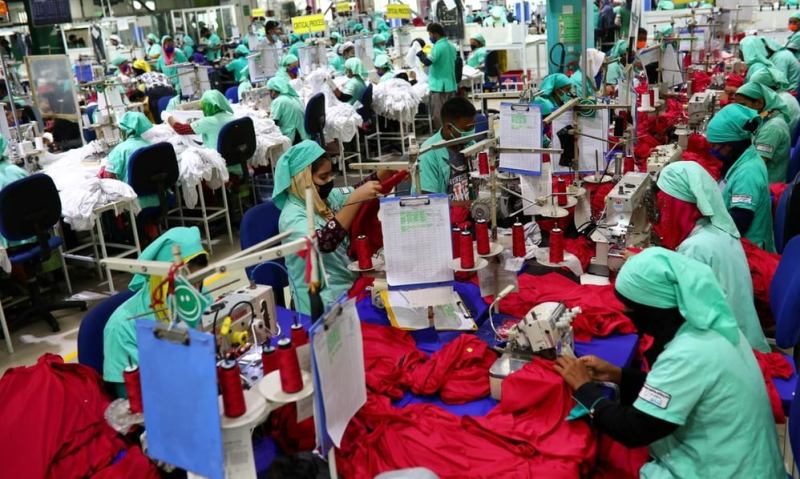
Bangladesh’s garment exports to Europe have remained largely unaffected following India’s suspension of transhipment through its airports in April, as exporters adjust to alternative routes and improved domestic facilities.
Most shipments now move by sea from Chattogram port to Colombo, Sri Lanka, with time-sensitive consignments airlifted from Dubai. Previously, goods were transported through India via Benapole and flown out of Kolkata and Delhi.
The government has bolstered local air cargo capacity by installing an explosive detection system (EDS) at Osmani International Airport in Sylhet and repairing all four EDS machines at Hazrat Shahjalal International Airport (HSIA) in Dhaka. Ground-handling charges have also been reduced by five to six cents per kilogramme.
Shovon Islam, managing director of Sparrow Group, said pressure on Dhaka airport has eased, with major international brands now flying goods directly from Sylhet or Dhaka. Faisal Samad of the Bangladesh Garment Manufacturers and Exporters Association (BGMEA) noted that many buyers are still using sea routes, keeping air cargo space readily available.
Before the suspension, around $2 billion worth of garments were sent annually through India. Between January and March 2025, 34,900 tonnes worth $462 million were transported via Indian airports.
Kabir Ahmed, former president of the Bangladesh Freight Forwarders Association (BAFFA), said screening facilities at Dhaka and Sylhet have improved significantly, with minimal delays reported. Air cargo rates from Sylhet to Europe now average $2.80 per kilogramme in off-peak months, rising to $3.80–$4.00 from Dhaka during peak season, compared with $2.10–$2.20 per kilogramme via India plus additional transport costs.
Civil Aviation Authority officials confirmed plans to reduce screening charges for Europe-bound cargo by 25% and maintain smooth operations during the peak season. Sylhet’s Osmani International Airport now has 100 tonnes of storage capacity, ready for expansion if demand rises.
While the opening of Dhaka’s third terminal by December now appears uncertain, authorities remain open to inviting international operators to manage the facility.