
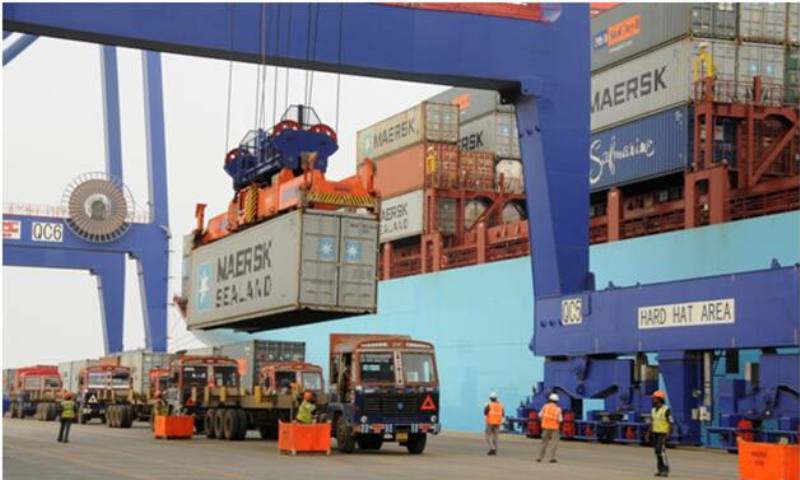
Bangladesh’s imports from India rose significantly to $10.96 billion in FY2025-26, from $9.62 billion a year earlier, despite trade restrictions imposed by both countries on the movement of several goods. In contrast, Bangladesh’s exports to India remained largely unchanged at $1.75 billion, compared with $1.76 billion in FY2024-25, according to National Board of Revenue data.
India remains Bangladesh’s second-largest trading partner after China and its largest trading partner in South Asia. However, the bilateral trade imbalance remains substantial, with Bangladesh importing more than six times the value of goods it exports to India.
Indian yarn, cotton, fabrics and industrial raw materials continue to see strong demand among Bangladeshi manufacturers due to competitive pricing and specific requirements from international buyers. Yarn imports from India reportedly doubled to around Tk 30,000 crore in FY26, according to the Bangladesh Textile Mills Association.
Trade restrictions have intensified since Bangladesh’s political transition in 2024. Bangladesh restricted Indian yarn imports through land ports, allowing them only through Chattogram port, while India subsequently imposed restrictions on imports of Bangladeshi garments, agro-processed products, jute goods, furniture and other items through land ports.
Industry leaders and economists say Bangladesh has considerable scope to expand exports to India, but its export basket remains heavily concentrated in apparel. They cited Indian import-substitution policies, stringent standards and the absence of a regional value chain as key barriers.
Experts have called for stronger bilateral engagement, including negotiations on a Comprehensive Economic Partnership Agreement (CEPA), improved market access and the resumption of smoother goods movement through land ports.
Business leaders also stressed that the ongoing trade issues require dialogue and, ultimately, a political solution at the highest level to strengthen Bangladesh-India economic relations and unlock greater two-way trade.