
Brazil’s economy is growing fast: the world’s largest net food exporter has a wealth of soybeans and beef, iron ore, and copious petroleum supplies.
Increasing interest from China is evident, geopolitically and at street level, where futuristic BYD EVs have begun to appear and, unexpectedly, Brazil is also trouncing other countries in energy transition, garnering almost 50% of its energy from river hydropower and nearly 30% more from solar and wind.
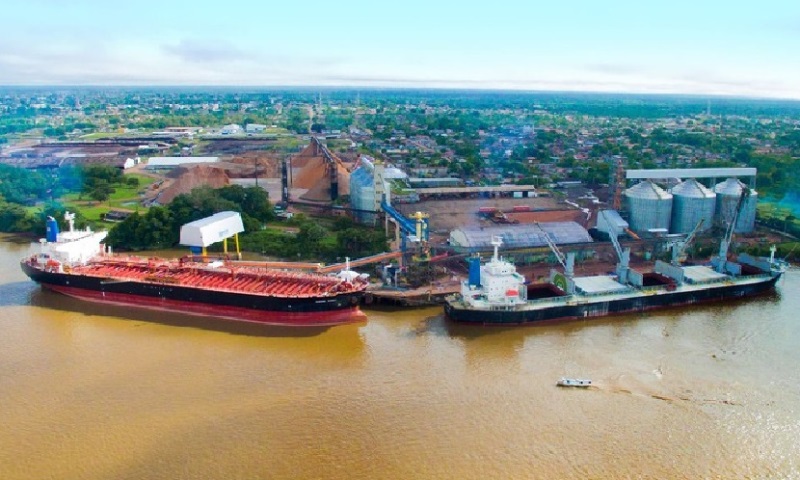
But the country has a problem. While its economy might be ready for the big time, its infrastructure and ports are not, threatening a bottleneck for future growth.
In Manaus, the city of the ‘Amazon’, an Amazon parcel takes a fortnight to arrive. During the recent El Nino phenomenon, which left river shipping unviable, the city had to rely upon its roads – cracked streets cum highways giving way with little warning, to dirt roads – for survival.
Last year, Brazil’s Lula administration embarked on an ambitious programme of reforms. Infrastructure spend reached BRL259bn ($59bn), 2.22% of GDP, according to the Brazilian Association of Infrastructure and Basic Industries (ABDIB). A decade-high, but still less than is needed, much of this has come from the private sector auctions.
Seeking an injection of private capital in the country’s ports, the government auctioned eight port terminals in 2024, with a further 16 leases and five concessions planned for this year, and a further 20 concessions are scheduled next year.
The government is hoping to reverse 50 years of arrested development in ports.
In March 2024, a working group launched a ‘Manifesto for Innovation in the Maritime and Port Sector’, which highlighted waiting times of five days or more, and customs clearance times of over two days, and said there were “…not enough… incentives to take risk” and a fear of “legal consequences or audits that assess compliance with rules and regulations”.
This year, CMA CGM garnered a 47.55% stake in Santos Brasil, operator of Brazil’s largest port. It remains to be seen whether input from a box giant can turn things around; throughout 2024, a monthly average of 80% of vessels suffered delays, often two weeks or more, according to the ElloX Digital Detention Zero Bulletin annual report. Performance this year appears to be improving from this low bar, the April DZB showing 58%, and an eight-day average wait.
With a 2.5m teu capacity, Tecon Santos is the most efficient terminal at the port, new owner CMA CGM claims, and handles 40% of Brazil’s overall container volume. Later this year, the National Water Transport Agency (ANTAQ) will award a 25-year concession to operate Tecon Santos 10, including investments of BRL5.6bn ($99m) in doubling the capacity of the port.
But here, a battle is brewing. In an inversion of recent US policy, the Lula administration, through ANTAQ, is reticent to allow capture by European container giants and is disqualifying them from the bidding process – much to the chagrin of Mærsk, which argues that will hamstring competition and forego the entry of players that best understand how to address Brazil’s capacity woes.
Something has to give. Brazil’s ill-equipped ports are costing the economy a fortune, according to the Brazilian Coffee Exporters Council, whose members have lost $11.72m thanks to poor port performance since last June. In March alone, the shortfall in exports cost Brazil $265m in foreign exchange revenue.
“Brazil urgently needs to rethink its logistics strategy,” said Rodrigo Reis, logistics manager at the Cerrado Coffee Growers Cooperative, based in Minas Gerais. “It’s no use promoting our coffee abroad if we can’t ship it reliably and cost-effectively. We’re still operating with infrastructure that’s stuck in the past, while export volumes grow year after year. The math just doesn’t add up.”
And Mario Veraldo, CEO of Latin America logistics company MTM Logix, added: “Brazilian ports are operating at full capacity, but outdated equipment, lack of maintenance, and under-investment have created an unsustainable situation.
“For modernisation to happen at scale, public sector engagement is essential. Policies that expand infrastructure investment, incentivise private participation, reduce regulatory red tape, integrate different modes of transport, and improve workforce training are urgently needed to unlock the system and prepare Brazilian ports for future logistics challenges.”