
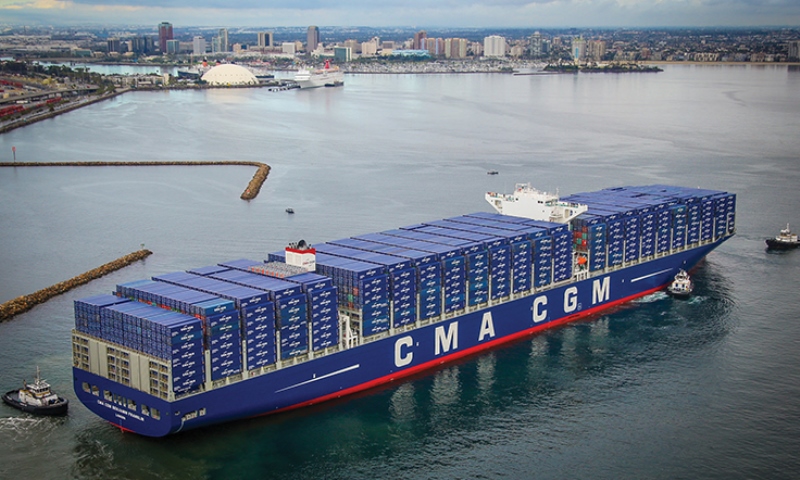
CMA CGM has announced revised freight-all-kinds (FAK) rates for shipments moving from the Indian Subcontinent to key destinations across Latin America, reflecting ongoing market adjustments in global container trade.
The updated pricing applies to cargo originating from major ports in India, Pakistan, Sri Lanka and Bangladesh, with coverage extending to ports in Central and South America as well as the Caribbean. The new rates are set to take effect from the specified implementation date and will apply to dry containers, with reefer tariffs remaining subject to separate conditions.
Industry observers note that carriers continue to recalibrate pricing strategies amid fluctuating demand, vessel capacity adjustments, and shifting trade dynamics across long-haul routes. The India–Latin America corridor has seen evolving cargo flows in recent months, driven by diversified sourcing patterns and growing bilateral trade.
CMA CGM stated that the revised FAK structure aims to align pricing with prevailing market conditions while maintaining service reliability and network efficiency. The carrier operates multiple services connecting the Indian Subcontinent with Latin American markets, offering transshipment options via strategic hub ports.
The rate adjustment underscores the broader trend of carriers fine-tuning freight tariffs as global shipping markets navigate volatility and changing supply-demand fundamentals.