
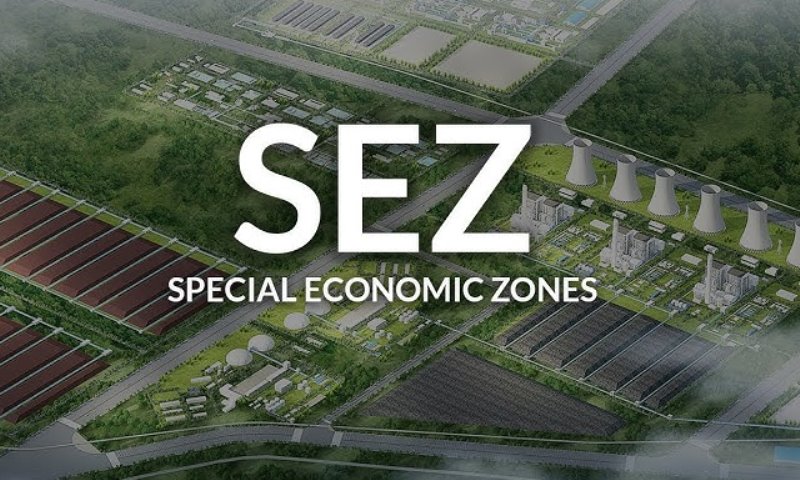
The Ministry of Commerce and Industry will convene a meeting of key stakeholders on June 30 to deliberate on reforms for Special Economic Zones (SEZs) and the harmonisation of India’s export promotion schemes, according to an official.
The discussions are expected to focus on addressing operational challenges faced by SEZ developers and units while formulating a roadmap for the next phase of reforms aimed at enhancing the competitiveness of India’s export ecosystem.
Among the issues likely to be taken up are allowing Indian Rupee (INR) payments for services provided by SEZ units to the Domestic Tariff Area (DTA), permitting SEZ units to undertake job work for DTA entities without mandatory export linkage, promoting import substitution, reforms in Free Trade Warehousing Zones (FTWZs), and measures to further improve the ease of doing business within SEZs.
Under the existing framework, SEZs are treated as foreign territories for customs laws and trade duties, with restrictions on duty-free sales to the domestic market.
Roadmap for SEZ 2.0
The stakeholder consultation comes as the government has constituted a 17-member committee to recommend comprehensive reforms to India’s SEZ policy.
The committee is conducting a background study on the harmonisation of various export promotion schemes, including Special Economic Zones (SEZs), Export Oriented Units (EOUs), Manufacturing and Other Operations in Warehouse Regulations (MOOWR), Advance Authorisation (AA), Export Promotion Capital Goods (EPCG) Scheme, and Duty Free Import Authorisation (DFIA).
Based on its findings, the panel will prepare a concept paper outlining a roadmap for broad-based reforms and the formulation of a new SEZ 2.0 policy.
The review is considered timely as India’s trade and investment landscape has evolved significantly since the SEZ Act was enacted in 2005, with changing global supply chains, trade agreements, and export dynamics necessitating a modernised policy framework.
Exports Decline
The reform exercise also comes against the backdrop of declining exports from SEZs. Total exports from these zones fell to USD 133.45 billion in 2025-26, compared with USD 172.07 billion in 2024-25.
India currently has 276 operational SEZs housing 6,695 units, which continue to play a significant role in the country’s export-led manufacturing and services sectors.