
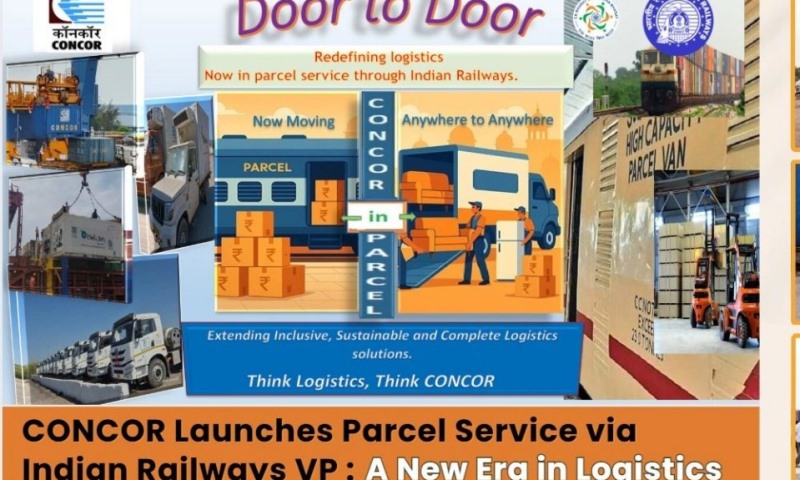
In a landmark move set to redefine long-haul logistics in India, Container Corporation of India Ltd. (CONCOR), in collaboration with Indian Railways, has launched a dedicated End-to-End Parcel Service. The inaugural service commenced on 7 August 2025, operating from BIRD Terminal, Mumbai to SGYT Terminal, Kolkata via Indian Railways’ Parcel Van (VP) under the JPP-RCS timetable.
This new offering is designed to combine the speed, reliability, and vast reach of the Indian Railways network with CONCOR’s integrated logistics expertise. The fixed timetable ensures predictable transit schedules, enabling businesses to plan their supply chains more efficiently.
Seamless Door-to-Door Delivery
The service features real-time tracking, advance booking facilities, and doorstep pickup and delivery, bridging the gap between rail and road transportation. It caters especially to small and medium-sized shipments, e-commerce players, and MSMEs, offering them a cost-effective, sustainable alternative to road haulage.
By directly collecting cargo from the consignor’s location and delivering it to the consignee’s premises, CONCOR is introducing a truly integrated logistics solution that reduces handling delays, optimises costs, and supports India’s green transport objectives.
Driving Supply Chain Efficiency
This initiative aligns with the Government of India’s vision of enhancing ease of doing business and strengthening multi-modal transport connectivity. The service is expected to decongest highways, reduce carbon emissions, and significantly improve turnaround times for businesses reliant on quick and reliable intercity cargo movement.
“The launch of CONCOR’s door-to-door parcel service marks the beginning of a new chapter in multimodal logistics. It represents not merely a change in mode of transport, but a fundamental shift in approach—towards greater efficiency, enhanced sustainability, and a future-ready logistics ecosystem,” said Sanjay Swarup, CMD, CONCOR.
With this pioneering move, CONCOR and Indian Railways are not only expanding the role of rail in parcel logistics but also creating new opportunities for trade and commerce across regions—making rail transport more competitive in the fast-moving goods sector.