
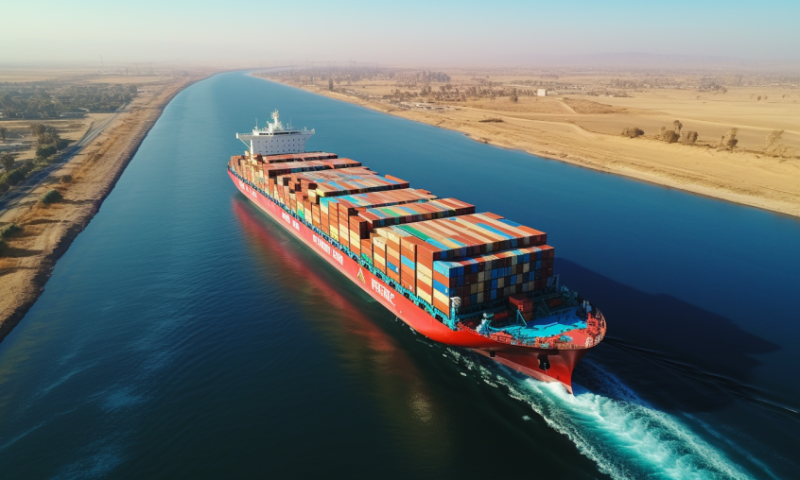
Container ship traffic through the Suez Canal has reached its highest weekly level since January, signalling a gradual recovery in confidence along the Red Sea trade route.
According to the latest figures from maritime consultancy Drewry, 35 container ships transited the Suez Canal in the week ended 28 June, the strongest weekly performance recorded in nearly six months.
Drewry’s Red Sea Diversion Tracker showed that 59 container vessels passed through the canal during the two weeks to 28 June, representing a 7% increase compared with the previous fortnight. The consultancy said the rise reflects a cautious return of carriers that had previously diverted vessels around the Cape of Good Hope to avoid security risks in the Red Sea.
The consultancy noted that a potential US-Iran agreement could become a key turning point for regional shipping. Drewry said such a development could “reset the clock” on the return of additional vessels to the Suez route by improving perceptions of geopolitical stability and reducing concerns over disruptions in the Red Sea and Gulf region.
Since late 2023, many major container lines have rerouted services away from the Suez Canal following attacks on commercial shipping linked to the wider Middle East conflict. The diversions added significant sailing distance, increased fuel consumption and absorbed vessel capacity across global trade networks.
While current transit numbers remain well below pre-crisis levels, the latest increase suggests some operators are beginning to reassess the economics of returning to the shorter Suez route as security conditions show signs of improvement.
Drewry said the pace of recovery will depend largely on regional security developments, insurance costs and carrier risk assessments in the coming months.