

A port’s reputation gets built in the places most people never see. During phone calls between a clearing agent and a customer, the agent inquires about when the cargo will be loaded. In a transporter’s decision to accept another job because the last truck turned around on time. In a factory, a manager’s confidence that an input will arrive before production stops. That is the real audience for Dar es Salaam’s recent surge in volumes, and the real test for the port’s next phase.
TPA operational data shows Dar handled 13.97 million tonnes from July to November 2025, compared with 10.40 million tonnes in the same months of 2024. FY 2024/25 closed at 27.7 million tonnes, up from 23.7 million tonnes in the previous year, a 15 per cent increase and the highest annual throughput recorded. Numbers like these bring pride, but they also bring pressure. Every tonne adds work to the yards, the gates, and the clearance chain. When the system works, the region feels it through lower friction. When it strains, the region feels it through delays and cost.
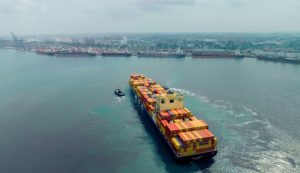 Dar’s answer begins with the capacity that affects vessel calls directly. The entrance channel and berths have been deepened to 14.5 metres under the Dar es Salaam Maritime Gateway Project, allowing larger ships to dock with heavier loads. That change ties into a time claim that has attracted attention among logistics players. Average container vessel time in port has fallen from about 10 days to about three days. A week saved on the ship side helps carriers protect schedules and helps cargo owners reduce exposure to time-related charges.
Bulk cargo handling adds another layer of evidence. Some grain vessels are now reported to offload 65,000 tonnes per call compared with around 15,000 tonnes previously. That shift matters for national supply chains and regional import cycles. It suggests a port that can process larger volumes per vessel call. It also increases the need for strong inland evacuation, because intense discharge sends more cargo into the system faster.
TPA Director General Plasduce Mbossa describes the port’s goal as a chain-wide discipline, not a waterfront-only story. “A port succeeds when the whole chain moves,” Mbossa said. “Working a vessel fast helps, but the customer experiences the port through clearance and evacuation. Our job stays on removing time from the chain end to end.”
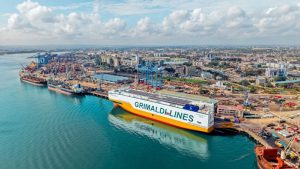 Operationally, Dar now runs a split terminal structure. DP World manages berths 0 to 7 under a performance-based arrangement. The container terminal, berths 8 to 11, is operated by Tanzania East Africa Gateway Terminal Limited. The structure matters because execution depends on daily decisions, berth planning, equipment uptime, maintenance routines, and yard management. Public investment in cranes and ICT systems supports the operators, while performance-based management sharpens expectations for productivity and consistency.
For the shipping side, a key move has been the implementation of Fixed Berthing Windows. Fixed Berthing Windows provides shipping lines with assured, predefined berthing windows. It rewards discipline on both sides. Carriers gain more certainty in when a vessel will be served. Terminals gain steadier planning and fewer last-minute disruptions. For cargo owners, the benefit comes indirectly through improved schedule integrity, which makes downstream planning easier for forwarders, transporters, and warehouses.
Mbossa frames the reform in customer language. “Predictability sits at the centre of competitiveness,” he said. “When berthing becomes predictable, the rest of the chain can be planned. Planning reduces panic. Planning reduces cost.”
Even with strong berthing discipline, most delay pain for traders often comes after discharge. Containers dwell too long when clearance cycles slow or when evacuation cannot keep pace with arrivals. Dar’s strategy responds by pushing capacity inland through the Kwala Inland Container Depot, linked by rail. Kwala aims to free quay space and keep the port fluid during seasonal peaks or heavy rains, while shifting handling and storage away from the waterfront.
TPA has described Kwala at a scale that signals intent. The depot sits on 502 hectares and is expected to handle and store about 3,500 containers per day and more than 300,000 containers per year, around 30 per cent of containers moving through Dar es Salaam. The numbers matter because they show a lever that can protect the seaport from yard saturation. They also give the market a way to judge whether the inland plan matches the waterfront gains.
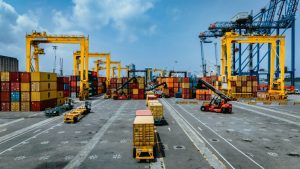 Mbossa argues that inland evacuation decides the quality of the port experience. “When cargo gets out quickly, everyone wins,” he said. “The ship gets served, the yard stays manageable, trucks rotate faster, and the importer receives goods sooner. Kwala supports that flow, and we will keep strengthening the link between the seaport and inland logistics.”
The next phase combines expansion and coordination. TPA is targeting a throughput of around 30 million tonnes by 2030, supported by adding 10 new berths and automation investments. The port authority is also working with border agencies to speed up customs clearances and with truckers to alleviate hinterland bottlenecks. Improved rail connectivity remains central to strengthening the port’s role as a regional gateway, because evacuation capacity determines whether time savings at berth translate into time savings for cargo owners.
Bagamoyo sits on the longer horizon as a complementary project, revived as part of a sequenced expansion approach. TPA’s position emphasises pragmatism and staging to align future capacity with demand growth and avoid overcapacity, while Dar continues to build reliability through operational reform, infrastructure upgrades, and inland logistics.
For the logistics market, Dar’s story now reads as a promise with measurable consequences. The port has raised throughput sharply in five months. It has paired that with deeper berths, faster vessel service claims, planned berthing windows, and a large inland depot strategy. The judgment will come from whether clearance and evacuation keep pace. If the chain stays predictable as volume rises, traders feel it in fewer surprises, tighter delivery timelines, and a gradual reduction in the hidden costs of waiting.