
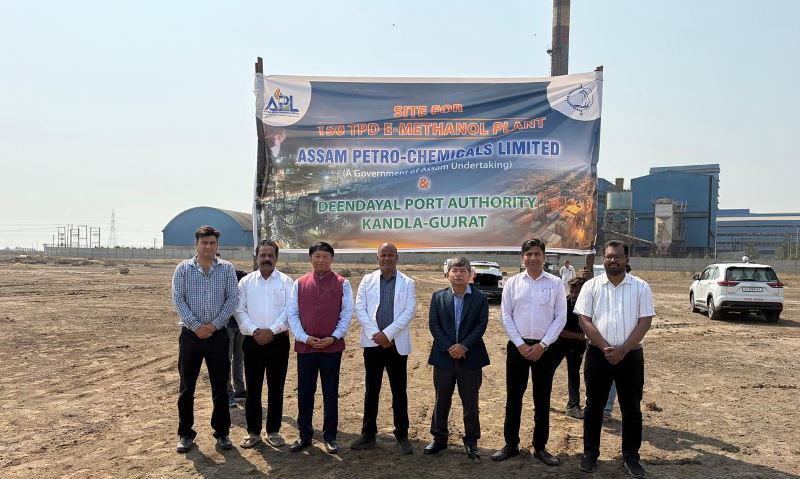
In a landmark move towards sustainable maritime development, Deendayal Port Authority (DPA), Kandla is set to initiate site work for India’s first 150 Tonnes Per Day (TPD) e-Methanol Plant in collaboration with Assam Petrochemicals Ltd. (APL).
The project site was visited today by senior officials of DPA Kandla and APL, led by Shri Sushil Kumar Singh, IRSME, Chairman, DPA Kandla, and Shri Bikul Deka, Chairman, Assam Petrochemicals Ltd. The visit marks the formal commencement of on-ground activities for this pioneering green fuel initiative.
This ambitious project underscores DPA’s strong commitment to clean energy transition, maritime decarbonisation, and India’s Net-Zero ambitions. The proposed e-Methanol plant will play a transformative role in promoting alternative marine fuels, reducing carbon emissions, and strengthening India’s green shipping ecosystem.
The APL–DPA partnership represents a historic milestone, positioning Kandla as a frontrunner among major ports in adopting sustainable fuel technologies. With the development of this 150 TPD facility, DPA Kandla continues to reinforce its leadership in building a future-ready, environmentally responsible maritime infrastructure.