
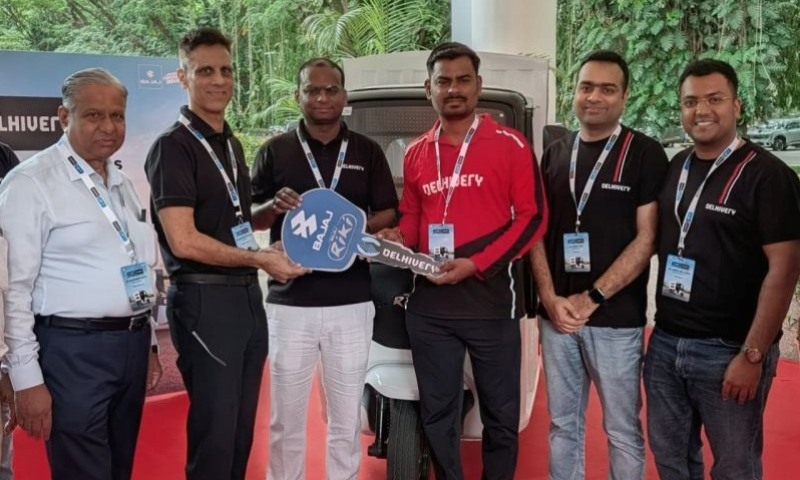
Logistics major Delhivery has entered into a strategic partnership with Bajaj Auto to deploy around 1,500 electric cargo three-wheelers across its nationwide network over the next two years, marking a significant step toward sustainable logistics and fleet electrification in India.
The initiative will commence with the deployment of 200 electric cargo three-wheelers during the first phase, which will be integrated into Delhivery’s last-mile delivery operations. The vehicles were officially flagged off from Bajaj Auto’s Akurdi facility in Pune and are expected to serve both metropolitan markets and emerging Tier-2 and Tier-3 cities.
The rollout includes a mix of L3 and L5 electric cargo vehicles designed to support high-density and heavy-payload delivery routes. Delhivery said the partnership aligns with its broader objective of reducing logistics-related emissions while improving operational efficiency across its network.
According to the company, the transition to electric cargo vehicles is expected to enhance earnings for delivery partners by lowering fuel and maintenance expenses. Combined with route optimization technologies, the EV fleet is expected to improve delivery productivity and reduce operating costs.
The new weather-protected three-wheelers will also improve rider safety and comfort, particularly on demanding delivery routes that require transporting larger cargo volumes. By reducing physical strain and exposure to adverse weather conditions, the deployment aims to create a more efficient and rider-friendly delivery ecosystem.
From an environmental perspective, the partnership supports the ESG goals of both companies by reducing tailpipe emissions across urban and regional logistics operations. Delhivery noted that the initiative will also help its enterprise customers advance their Scope 3 emissions reduction targets through cleaner supply chain operations.
The collaboration reflects a growing trend among logistics operators to adopt electric mobility solutions as India accelerates efforts to decarbonize transportation and build a more sustainable logistics infrastructure.