
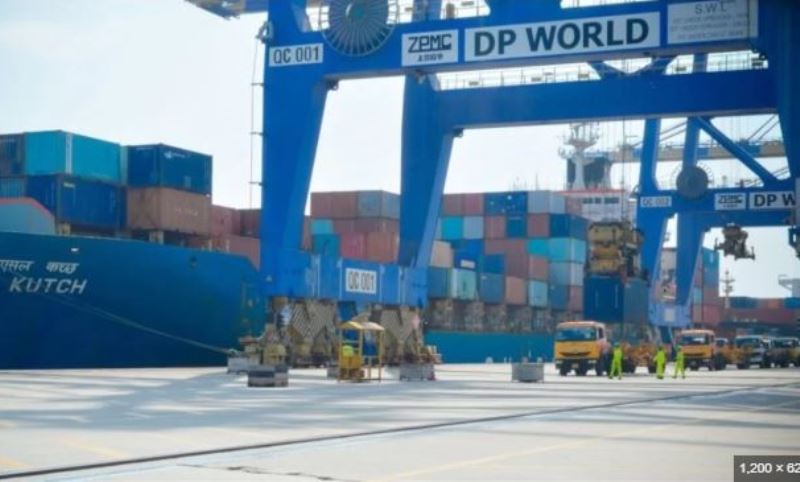
Multinational logistics company DP World is deepening its presence in Asean to capitalise on Southeast Asia’s emergence as a key offshore manufacturing base for Chinese companies.
The renowned Emirati company believes that these firms are increasingly seeking to bypass trade barriers – including tariffs – when trading with Western markets.
The company plans to expand its footprint through strategic acquisitions, local partnerships, and infrastructure investments, DP World Asia Pacific chief executive officer and managing director Glen Hilton said today.
Asean is quickly becoming a significant offshore manufacturing hub for Chinese companies, according to the Asia Society Policy Institute.
Their investments in the region surged to a record US$17.6 billion in 2023, up from US$7.5 billion in 2020 (US$1=RM4.396).
“This dramatic uptick is driven by a mix of manufacturing, electric vehicles, technology, mining, and infrastructure development, including digital and renewable energy projects,” said Hilton, adding that DP World is renowned for its operations around the Jebel Ali Port in the United Arab Emirates (UAE).
He noted that the surge in Chinese investments reflects their ambition to avoid Western trade barriers, manage manufacturing and labour costs, cater to Asean’s growing consumer demand, and leverage the region’s strategic location as a global trade gateway.
“Moving forward, China-Asean trade is forecast to rise to US$616 billion within the next 10 years, the largest absolute increase worldwide,” Hilton said.
Another advantage is that Asean offers businesses a cost-effective and diplomatically neutral alternative to other manufacturing hubs in the Asia-Pacific region.
“ASEAN has emerged as a critical link between the two economies, and Southeast Asia plays a pivotal role as a manufacturing and logistics hub.
“The region also benefits from its strategic location and robust multilateral trade agreements, such as the Regional Comprehensive Economic Partnership (RCEP) and the Asean Free Trade Area (AFTA),” said Hilton.
Asean is currently China’s largest trading partner, with total trade between the two reaching about US$797 billion in the first 10 months of 2024.
In comparison, India’s trade with Asean accounted for 11 per cent of Delhi’s global trade volume.
Detailing its strategic investments, Hilton highlighted that DP World has completed the acquisition of Savan Logistics, operator of the Savannakhet Dry Port, located in Laos’ first special economic zone.
At the same time, the company is partnering with Sabah Ports Sdn Bhd to manage the Sapangar Bay Container Port and has also reached an agreement with the Indonesia Investment Authority and PT Pelabuhan Indonesia (Pelindo) to operate the Belawan New Container Terminal.
Hilton emphasised that DP World is ready to embark on an ambitious expansion, offering a full suite of logistics services including freight forwarding, warehousing, inventory management, and contract logistics, while continuously strengthening its ports and terminals business.
“However, access to capital, trade policies, and rates of economic development vary across the region. Some Southeast Asian markets are more ready than others to invest in improving their supply chains and logistics,” he noted.
Hilton also pointed out that regulatory frameworks, particularly around foreign ownership of key assets such as ports and terminals, differ significantly across Asean.
“DP World navigates these complexities by partnering with local entities and fostering ongoing dialogue with authorities to uncover win-win solutions aligned with national trade policies,” he said.
Hilton added that DP World is constantly exploring strategic partnerships and investments aligned with its business strategy, to streamline trade flows within the region and beyond.
He also highlighted that the size and geographical diversity of Southeast Asia demand robust multimodal transport systems.
“Expanding trade means enhancing all modes of transportation including road, rail, sea, and air,” Hilton said.