
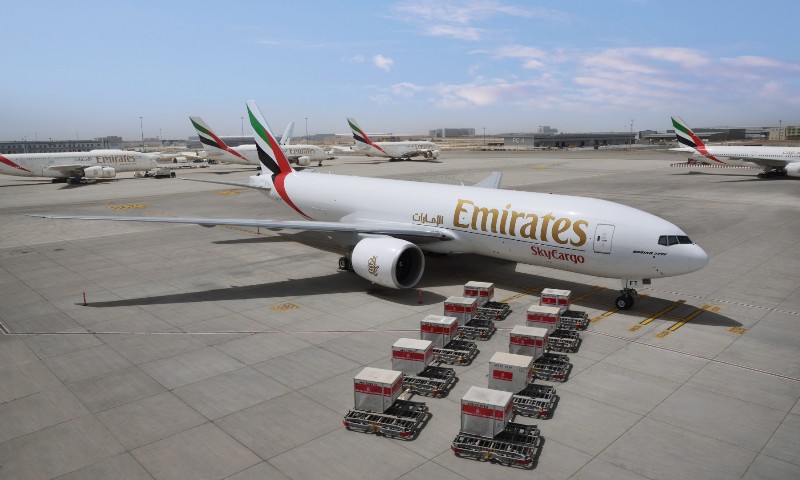
Dubai is reinforcing its position as a leading global logistics and trade hub as rising air cargo volumes continue to drive the movement of goods across international markets. The emirate’s integrated logistics network, supported by world-class aviation and multimodal infrastructure, is enabling businesses to maintain efficient and resilient supply chains amid growing global demand.
The increase in air freight activity has been fueled by expanding e-commerce, higher demand for time-sensitive shipments, and the growing movement of high-value goods such as pharmaceuticals, electronics, perishables, and automotive components. Dubai’s strategic location at the crossroads of Asia, Europe, and Africa has further strengthened its role as a key gateway for international trade.
Industry stakeholders highlighted that seamless connectivity between airports, seaports, free zones, and logistics parks has enhanced cargo handling efficiency and reduced transit times. This integrated logistics ecosystem allows freight to move quickly between air, sea, and land transport, offering greater flexibility for global shippers and logistics providers.
The continued growth in air cargo volumes is also encouraging investments in digital logistics solutions, warehouse automation, and cold chain infrastructure to meet evolving customer requirements. Logistics companies are increasingly adopting advanced technologies to improve cargo visibility, operational efficiency, and supply chain resilience.
With global trade patterns continuing to evolve, Dubai is expected to play an increasingly important role in facilitating cross-border commerce. Industry experts believe the emirate’s ongoing infrastructure investments, strategic location, and commitment to innovation will further strengthen its competitiveness as one of the world’s premier logistics and air cargo hubs.