
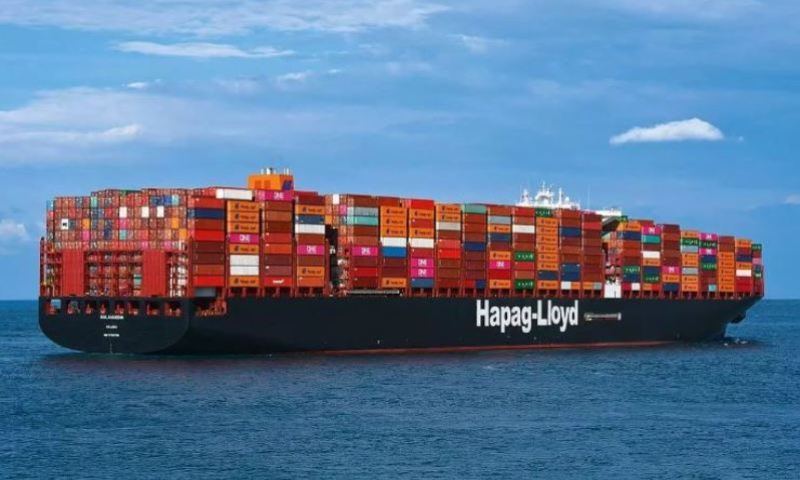
A Hapag-Lloyd delegate has met with the Sri Lanka Port Authority (SLPA) Chairman to explore business collaborations.
The meeting focused on exploring future growth opportunities and enhancing operational efficiencies within Sri Lanka’s maritime sector.
The Hapag-Lloyd delegation included Prateek Gandhi, Faheem Mir, Lalith Witanachchi, Mindaka Dassanayake, Rohan Ranasinghe, and Iqram Cuttilan.
During the discussions, both parties highlighted the critical need to strengthen partnerships, aiming to cement Sri Lanka’s role as a key maritime hub in the region.
The conversation also delved into exciting upcoming industry developments, with Hapag-Lloyd reaffirming its dedication to enhancing service standards and championing sustainable shipping practices.
The meeting underscored the mutual commitment of Hapag-Lloyd and SLPA to fostering sustainable and innovative maritime solutions.
This partnership is set to boost efficiency, expand cargo handling capacity, and strengthen connectivity within South Asia’s shipping network while positioning Sri Lanka as a vital player inglobal trade, driving improved logistics and sustainable shipping practices.
In January, SLPA terminals reported that it recorded their highest-ever throughput of 2.41 million TEUs in 2024.