
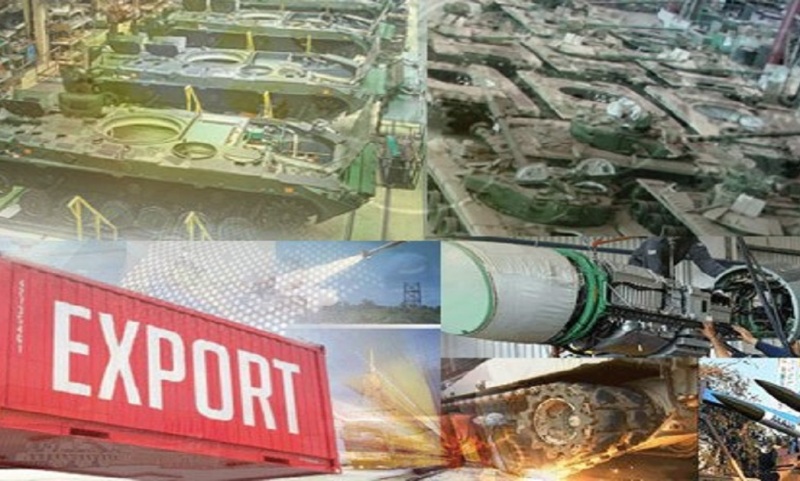
India’s growing reliance on Russian arms is not just a continuation of their long-standing defense ties, but a strategic move that is reshaping global military dynamics. In recent months, India’s share of Russian arms exports has surged by a significant 15%, a stark reminder of the deepening defense relationship between the two countries.
This surge is particularly noteworthy as it comes amid rising geopolitical tensions and an increasingly complex security environment in Asia, underscoring how vital Russia remains to India’s military modernization efforts.
In early December, Viktor Yevtukhov, head of Russia’s presidential directorate for state policy in the defense sector, confirmed that India’s arms imports from Russia had seen a dramatic rise in just six months.
He highlighted key projects such as the construction of Project 11356 Talwar Class frigates as emblematic of the growing collaboration. These ships, which are being transferred to the Indian Navy, represent one of the most significant aspects of military-technical cooperation between the two nations, especially as the seventh frigate of the class is now entering service with India.
The Talwar Class frigates are not only a testament to Russia’s advanced naval technology but also illustrate the ongoing shift in the dynamics of Russian-Indian defense relations.
Yevtukhov remarked that the construction and transfer of these ships reflect the broader trend of localizing the production of Russian military systems within India’s defense industry.
This shift towards joint production is in line with India’s broader strategy to bolster its own defense capabilities while ensuring continued access to cutting-edge military technology from Russia.
Historically, Russia has been India’s primary defense partner, a relationship that stretches back to the Cold War era when India became one of the top recipients of Soviet military equipment.
Over the years, Russia has supplied India with a range of advanced systems, from T-72 and T-90 tanks to MiG-29 and Su-30 fighter jets, many of which have been customized to meet India’s specific needs.
This enduring partnership has resulted in Russia being the largest supplier of arms to India, a position the country has maintained despite China’s growing military-industrial base and increasing self-reliance.
In fact, India’s role in shaping key Russian defense programs cannot be overstated. The development of systems like the T-90 tanks and Su-30 fighters was heavily influenced by Indian orders, as post-Soviet Russia lacked the financial resources to fund these advanced systems on its own.
India’s contributions were critical in ensuring the success of these programs, which have become integral to the military forces of both nations.
Despite efforts to promote indigenous defense production, India’s reliance on Russian technology persists. Over the years, India has emphasized local production and technology transfer in its defense procurement strategy, but the country has faced significant challenges in developing advanced weapons systems independently.
As a result, joint ventures with Russia remain crucial to India’s defense modernization plans. A prime example of this ongoing collaboration is the acquisition of over 270 Su-30MKI fighter jets in the 2000s and 2010s.
These highly customized jets, equipped with advanced radar and thrust vectoring capabilities, were far more advanced than anything Russia could afford for its own air force during that period.
Although large-scale acquisitions of Russian aircraft have slowed in recent years, India’s interest in cutting-edge military systems remains strong.
The Su-57 fifth-generation fighter, for example, has been a point of focus for India, with reports of ongoing discussions regarding a license production deal as recently as February 2023.
India’s pursuit of the Su-57 is driven by its need to modernize its air force and counter both China’s rapidly expanding fleet of fifth-generation fighters and the threat posed by Pakistan’s growing military capabilities.
Beyond aircraft, India has continued to expand its defense ties with Russia through other high-profile procurements. Reports indicate that India is negotiating the lease of up to two more Russian Akula Class nuclear-powered attack submarines, further bolstering its naval capabilities.
Additionally, India is set to acquire advanced Voronezh-DM long-range radar systems in a deal valued at over $4 billion, a clear indication of India’s commitment to maintaining a robust and diverse defense posture in the region.
Throughout all of this, India has remained steadfast in its refusal to bow to international pressure, particularly from the United States and its European allies, to scale back its defense relationship with Russia.
Despite the threat of economic sanctions and diplomatic repercussions, India has continued to prioritize its defense needs and maintain a strong partnership with Moscow.
This resistance to outside pressure highlights India’s independent foreign policy and its determination to secure its national interests, even if it means aligning with Russia at a time when geopolitical tensions are at their peak.
As India continues to expand its military capabilities and modernize its armed forces, its partnership with Russia will remain central to its defense strategy. With a growing focus on joint production, technology transfer, and high-profile procurements, India’s reliance on Russian military technology is unlikely to diminish anytime soon.
In the face of an increasingly complex and unpredictable global security environment, India’s defense ties with Russia offer a critical advantage that ensures the country remains a powerful player in the region and on the world stage.