
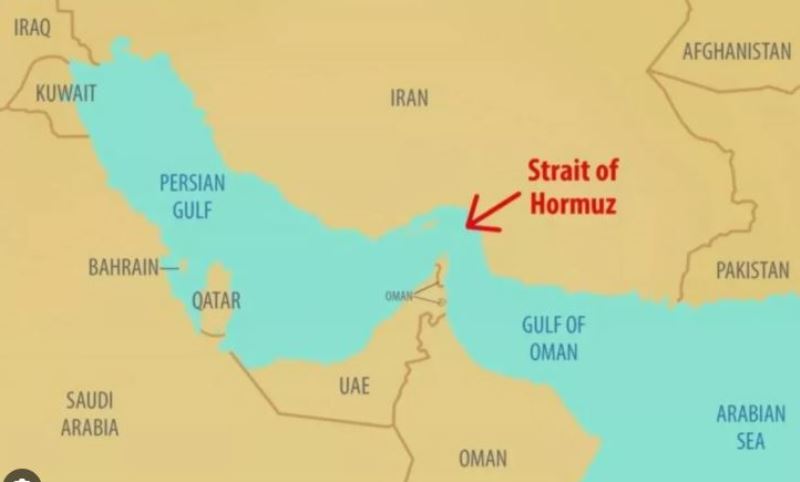
Iran and Oman are in the final stages of an agreement to establish new shipping lanes through the Strait of Hormuz, but Tehran has made clear that the strategic waterway will not reopen until the United States meets a broader set of conditions.
Iranian Foreign Minister Abbas Araqchi said on Sunday that the agreement between Tehran and Muscat was close to completion. The proposed arrangement would define shipping routes to be used once the Strait of Hormuz is reopened.
However, Araqchi stressed that the agreement itself would not automatically result in the reopening of the waterway. Iran is seeking measures from Washington that include compensation for military attacks, an end to sanctions and the lifting of restrictions on Iranian shipping.
The Strait of Hormuz is one of the world’s most important energy chokepoints, with roughly one-fifth of global oil and liquefied natural gas shipments passing through it before Iran blocked the waterway following U.S. and Israeli attacks.
A U.S. official previously said Washington expected an agreement between Iran and Oman soon and indicated that commercial shipping could resume once arrangements were in place. The official also said the United States would lift its blockade of Iranian ports once a deal restoring unrestricted commercial shipping was announced, subject to Iran fulfilling its commitments.
Iran-U.S. talks remain stalled
Despite the progress involving Oman, direct negotiations between Iran and the United States remain suspended. Araqchi said Tehran would not enter talks with Washington while the United States continues to violate an interim agreement reached in June.
Messages between the two sides are nevertheless being exchanged through intermediaries.
Iran has outlined several conditions for the reopening of the Strait, including compensation for U.S. military action, an end to threats and aggression against Iran and its regional allies, the lifting of sanctions and the release of Iranian assets.
The developments highlight the complexity of restoring normal commercial traffic through the waterway, with shipping industry sources previously questioning whether proposed arrangements giving Iran control over vessels entering the Gulf would be practical for international shipping operators.
Regional shipping risks remain high
The uncertainty around the Strait of Hormuz comes amid continued attacks on maritime and energy infrastructure across the region.
The United Arab Emirates said on Saturday that Iran had attacked a vessel affiliated with its state oil company. Iran has not immediately commented on the incident.
Meanwhile, Yemen-based Houthi forces claimed responsibility for a drone attack on Saudi Aramco’s Jazan refinery on Sunday. Saudi authorities confirmed that a fire had broken out at the refinery but said it was later extinguished and that there were no injuries.
The Jazan facility has a processing capacity of around 400,000 barrels of crude oil per day, making continued attacks in the region a concern for energy markets and maritime trade.
The latest developments also follow Saudi Arabia’s signing of a defence pact with Turkey and Pakistan amid growing regional tensions. Turkey has said the agreement is intended as a broader security commitment rather than an alliance directed specifically against Iran.
For global shipping and energy markets, the potential reopening of the Strait of Hormuz could provide significant relief. However, until the wider U.S.-Iran conditions are resolved, uncertainty over the resumption of unrestricted commercial traffic is likely to persist.