
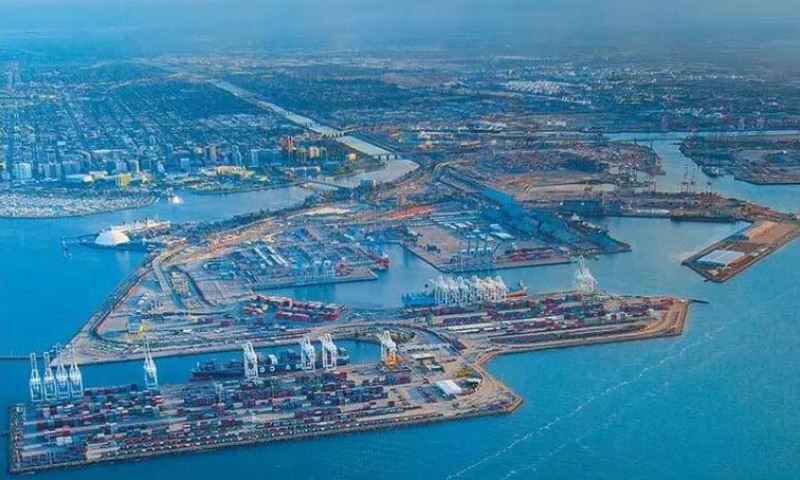
The Port of Long Beach has released its Green Port Progress Report to mark 20 years since adopting its Green Port Policy, highlighting sharp emission cuts achieved alongside rising cargo volumes.
Since 2005, the port has cut diesel particulate matter by92 per cent, nitrogen oxides by 71 per cent, and sulfur oxides by 98 per cent, while container volumes rose 20 per cent.
The report highlights programs including shore power, the Green Flag speed incentive, and funding for zero-emission vehicles.
CEO Mario Cordero said the port is now focused on “pushing 92, 71, and 98 to 100,” referring to the push for full emissions elimination.
In collaboration with the Port of Los Angeles, Long Beach updated its Clean Air Action Plan in 2017 with a goal of zero-emissions operations.
The port now operates around 457 zero-emission trucks and has invested $60 million to support fleet modernisation and charging infrastructure.
Planned projects include hydrogen fueling stations, expanded charging for electric trucks and locomotives, and greater shore power use.
The port has also committed $65 million to its Community Grants Program to support local environmental and health projects.
“These achievements demonstrate that clean air and cargo growth can go hand in hand,” said Harbor Commission President Bonnie Lowenthal.
Recently, International Transportation Service (ITS) unveiled the South Slip Fill Project, a major $365 million terminal expansion at the Port of Long Beach, designed to boost capacity and support some of the world’s largest container vessels.