
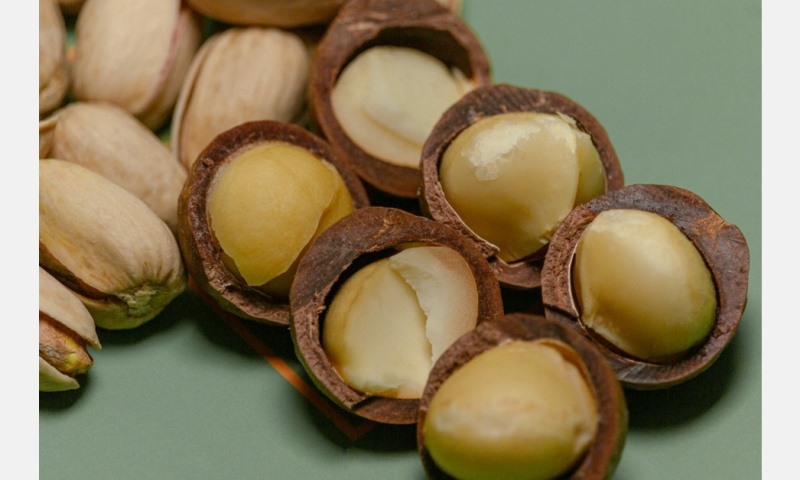
MACADAMIA exporters are shaping as a key winner from the Australia-India Economic Cooperation and Trade Agreement (AI-ECTA).
Under the agreement that took effect in late 2022, more than 85% of Australian goods exports to India (by value) are now tariff free, rising to 90% by 1 January next year.
Australian macadamias are predominantly grown in southeast Queensland and northeast New South Wales, with key export markets being Japan, South Korea, China, Germany and the United States.
They are predominantly shipped through the Port of Brisbane in containers, typically exported large bags, either as nut and shell or with the kernels already cracked in Australia.
Trade and Investment Queensland believes India is emerging as “a promising new frontier”.
“With a growing middle class and a deep cultural appreciation for nuts, India is proving highly receptive to Australian macadamias,” TIQ stated.
“Thanks to improved technical access and a progressive tariff reduction schedule under the AI-ECTA, Queensland exporters are well-placed to capitalise on this high-potential market.”
According to TIQ, Queensland is well-placed to benefit from global growth in macadamia demand given the high standard of its orchards and commitment to quality.
The Australian Macadamia Festival is being held in Bengaluru, India, in September this year, an event aimed at broadening the nut’s appeal beyond niche markets.
TIQ works with the Australian Macadamia Society and key growers to ensure Queensland producers can markets and obtain important information.
According to Hort Innovation, there are around 800 macadamia growers in Australia producing around 50,000 tonnes annually.
From this 75 per cent of the Australian crop is exported, leading to “a strong and consistent supply for importers overseas”, Hort Innovation has stated.