
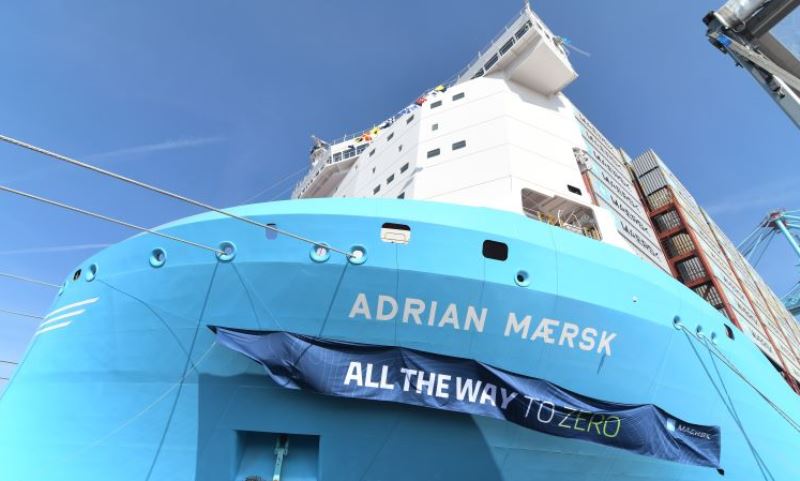
Moveing toward decarbonizing ocean transport, A.P. Moller – Maersk has announced the completion of the world’s first large dual-fuel methanol-powered container vessel fleet, a project that spans multiple continents, industrial partners, and sustainability milestones.
The global logistics and container shipping giant has now placed into operation a series of methanol-enabled container ships, each launched with deliberate symbolism in ports from Aarhus to Yokohama, including key hubs like Los Angeles, Rotterdam, Singapore, and Mumbai. These vessels, which can operate on either conventional fuels or green methanol, represent a tangible shift in the maritime industry’s approach to emissions reduction.
Developed in collaboration with HD Hyundai Heavy Industries and MAN Energy Solutions, and supported by a broad base of commercial partners including Nestlé, Temasek, Nike, Vestas, Nissan Motor Corporation, and Primark, Maersk’s dual-fuel fleet demonstrates a combined push for innovation and sustainability across industries.
A Fleet That Signals a Shift
Rather than opting for gradual retrofits, Maersk committed to building a full fleet of methanol-ready vessels at scale. These ships aren’t prototypes—they’re operational assets now deployed across key global trade lanes. The project reflects a growing belief among logistics leaders that decarbonization isn’t a future aspiration—it’s a current requirement.
The fleet consists of over a dozen large ocean-going vessels equipped with dual-fuel engines capable of running on green methanol, a bio-based alternative with far lower lifecycle emissions than traditional bunker fuels. While methanol is not yet widely available at scale, Maersk has coordinated with fuel producers and port authorities to ensure bunkering is possible at strategic locations.
Each ship naming ceremony was carefully planned not just as a brand celebration but as a statement of intent. With events in Felixstowe, Shanghai, Ulsan, and more, the vessels were introduced with global visibility, underscoring the scale and momentum behind the initiative.