
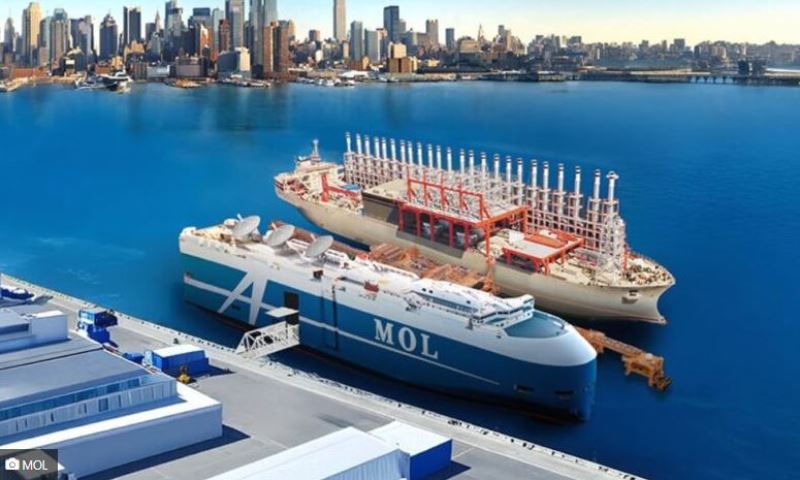
Mitsui O.S.K. Lines (MOL) and Hitachi have announced plans to convert decommissioned vessels into floating data centres, marking an innovative step at the intersection of maritime and digital infrastructure.
The initiative aims to repurpose retired ships into offshore facilities capable of housing data processing and storage systems. By leveraging existing hull structures, the companies seek to reduce construction costs and environmental impact compared to building new land-based data centres.
Floating data centres offer several potential advantages, including access to natural seawater cooling, which can significantly lower energy consumption. They can also be positioned closer to coastal demand hubs, improving data transmission efficiency and flexibility in deployment.
Industry experts note that the concept aligns with growing demand for data infrastructure driven by cloud computing, artificial intelligence, and digital services. At the same time, it provides a sustainable solution for managing aging vessels, supporting circular economy principles within the shipping industry.
MOL and Hitachi are expected to conduct feasibility studies focusing on technical design, power supply solutions, connectivity, and regulatory requirements. Key considerations will include ensuring stable operations in marine environments and integrating renewable energy sources where possible.
The project reflects a broader trend of exploring alternative uses for maritime assets, as shipping companies look to diversify revenue streams and contribute to sustainability goals.
If successful, floating data centres could emerge as a viable complement to traditional infrastructure, particularly in regions facing land constraints or high energy costs, while opening new avenues for innovation in both the maritime and technology sectors.