
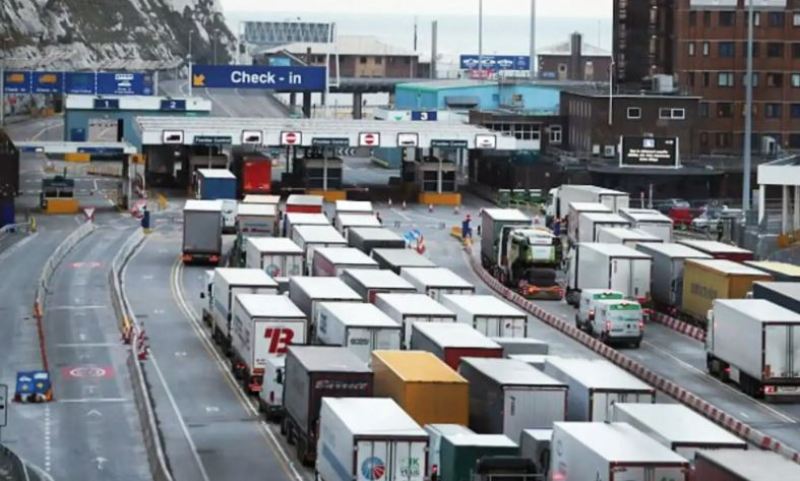
Did you know that the United Kingdom’s food exports dropped 17% in 2023 in comparison to 2019? Similarly, most temperature-sensitive goods have bore the brunt of ongoing operational adjustments, handling delays and complex import/export rules in the UK, thereby, severely bogging down trade. A lot of it can be attributed to UK’s exit from the European Union back in 2020.
Experts are positive that the impact of some of these challenges will subside eventually as businesses adapt completely to the situation. However, even at present, maintaining the trade flow between the UK and the EU has come with significant expenses to the traders. According to experts, the longterm effects of regulatory divergence and labour shortages will likely continue to shape the logistics landscape in the UK for years to come.
“Brexit-related regulations have introduced a range of challenges for the logistics sector, from increased paperwork and border delays to regulatory changes and cost pressures,” Steve Parker, Director General of the British International Freight Association, stated.
Moreover, Brexit has caused currency fluctuations, which has a direct impact on trade activity – adding on to the customs and regulatory amendments which increase supply chain costs. The financial impact of Brexit on the airline cargo industry has also been multifaceted, involving increased costs, operational challenges, and strategic adjustments. There is also an urgent need to address the pressures on the UK’s e-commerce sector, undermining its global competitiveness. Moreover, specialised sectors such as perishables and pharmaceuticals have faced increased regulatory hurdles that lead to delays and further complications.
“The impact assessment completed by the government prior to Brexit determined that there would be no impact on UK aviation. Our experience shows this is clearly incorrect and we are seeking support to mitigate the issues that have arisen, which we believe affects all UK airlines,” said Chris Hope, Chief Operating Officer One Air.
Since Brexit, numerous operational challenges within the UK’s supply chain have emerged, highlighting gaps that were either overlooked or inadequately addressed during the transition. Key areas affected include services related to goods, digital services, specialised goods and niche markets, and the movement of goods across multiple borders. Additionally , the Northern Ireland Protocol, intra-UK trade, short sea shipping, smaller ports, and supply chain resilience have also faced significant disruption. These issues have culminated in substantial inefficiencies and disruptions, particularly in logistics and supply chains.
“These challenges have disproportionately impacted SMEs, which often lack the resources to manage the additional costs and complexities,” explained Parker. “Larger firms may be able to mitigate these impacts through investments in technology and infrastructure, but the financial burden across the industry has been considerable, with long-term consequences for competitiveness and market access.”
For companies like One Air, Brexit has introduced additional areas of concern. When the UK was part of the European Union Aviation Safety Agency (EASA), maintenance, repair, and overhaul (MRO) operations were automatically approved for use by UK airlines. However, since Brexit, only a limited number of organisations that have applied for separate UK approval can provide these services. This has resulted in a considerable reduction in
MRO capacity available to UK airlines.
Despite the difficulties introduced by Brexit, there are opportunities for recovery and growth in the UK’s logistics sector. The future depends heavily on government policy, investment in technology and infrastructure, and the resilience of the industry.
“Politicians in the UK and Europe can ease the strain caused by Brexit through simplification, harmonisation, and cooperation,” Parker suggested. “This includes simplifying customs processes, recognising trusted trader schemes, improving border infrastructure, harmonising regulations, addressing labour shortages, and encouraging digital and technological collaboration. Revisiting the Trade and Cooperation Agreement (TCA) and fostering diplomatic dialogue could lay the groundwork for more resilient cross-border trade.”
Hope echoed the call for long-term solutions while urging the government to act quickly: “The UK government’s intention to invest in skills development is welcome as a long-term solution. However, there’s an urgent capacity shortage that needs immediate attention. A short-term fix could be achieved through mutual recognition of maintenance licences and approvals between the UK and EU.”
Another expert called for political intervention to facilitate smoother operations in the post-Brexit landscape: “Streamlining customs and regulatory procedures, investing in infrastructure at key entry points, and mutually recognising standards are crucial steps. Ultimately, achieving progress will require political will on both sides to acknowledge and address the damage that has been done and to reach necessary agreements.”
While Brexit has introduced substantial challenges for the UK’s logistics and supply chain sectors, it also presents an opportunity for transformation. By addressing operational barriers, improving regulatory processes, and fostering collaboration between the UK and EU, the industry can recover and strengthen its competitive position in global markets. However, this will require coordinated political and industry efforts to ensure long-term
resilience and success in a post-Brexit world.