
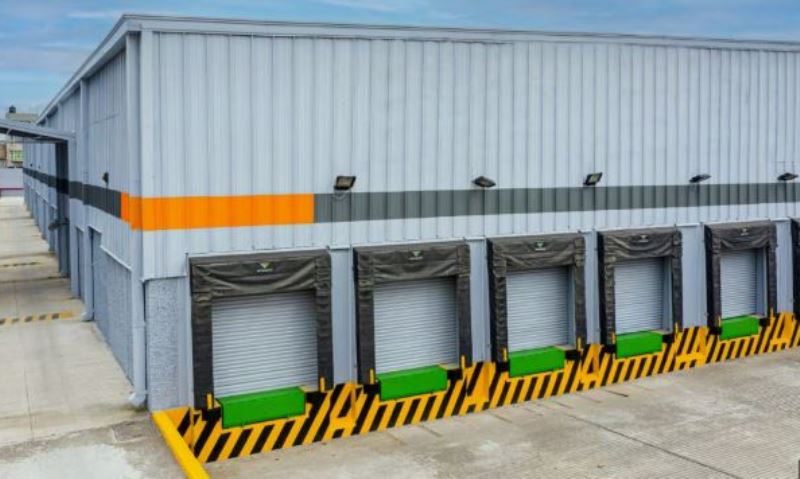
Warehouse vacancy rates in Mexico have sunk to historic lows in the wake of the near-shoring trend and, although the threat of tariffs has created uncertainty, the flow of foreign investment is expected to continue.
Warehouse occupancy in the central Bajio region jumped 51% last year, outpacing absorption of capacity in the rest of the country, despite strong growth in large cities and primary logistics hubs.
This drove the vacancy rate in Bajio down to 3.6%, and with record low vacancy rates in most of the country, rents have been on an upward trajectory. In 2023, they were 10% – 15% above 2022 levels.
The rising demand for warehouse space is part of a broader scramble for industrial real estate, which has been widely attributed to near-shoring. This has produced an unprecedented boom in the industrial real estate market, primarily in major cities.
Foreign direct investment in Mexico reached over $20.3bn in Q1 last year, double that seen in 2019, and more than 90% of this came from investors already having a presence in the country. The US was the largest source of direct investment, followed by Germany, Canada, Japan, and Argentina.
Nearly half the foreign investment (42%) flowed into manufacturing, followed by financial services, at 25%. Transport accounted for just 6%.
Not surprisingly, the automotive industry has led the charge, followed by light manufacturing. Between them, they created more than half last year’s demand for industrial real estate in Bajio, according to industrial real estate giant CBRE, which expects this trend to continue this year.
Ecommerce has also been on the rise. Argentina-based Mercado Libre, which dominates that market in South America, was the largest warehouse tenant in Mexico last year, taking 11% of the rented space in the nation.
The stance of the new administration in Washington raises questions over Mexico’s near-shoring boom, however. The US takes about 80% of Mexico’s exports, which make up about 40% of the nation’s GDP. So the 25% tariffs looming over sales to the US would hit the economy hard: by one estimate, this could drive Mexico’s GDP down 1.6% this year, and as much as 4.5% in 2026.
In addition, logistics companies would face higher operating costs and extended wait times at border crossings, according to logistics provider Mosur.
In late January, General Motors CEO Mary Barra revealed it was evaluating adjustments to production, adding that it had room in its US facilities to shift some truck production back north of the border. GM has four manufacturing plants in Mexico which last year turned out more than 889,000 vehicles and exported 830,630 – of which 653,200 went to the US.
However, the general director of Mexico’s automotive industry association believes GM would rather shift export destinations, which would see pick-up trucks produced in Mexico being sold more to other markets, while US plants would focus more on the domestic market.
Last month, Mexico’s auto exports dropped 13.7% year on year, despite a 1.7% rise in output. Exports to the US fell 10.8%. GM, Stellantis and Nissan all saw declines in excess of 20%.
Nevertheless, some observers predict ongoing foreign investment and further momentum from near-shoring for Mexico. Jason Seil, MD industrials – airfreight & surface transportation at TD Cowen, expects more investment going into cross-border logistics.
Meanwhile, the Mexican government is trying to spur fresh foreign investment. In late January it unveiled a $1.4bn near-shoring incentives package. The majority of the funding will go to companies that invest in fixed assets in Mexico, with the remainder earmarked for training and innovation incentives.