
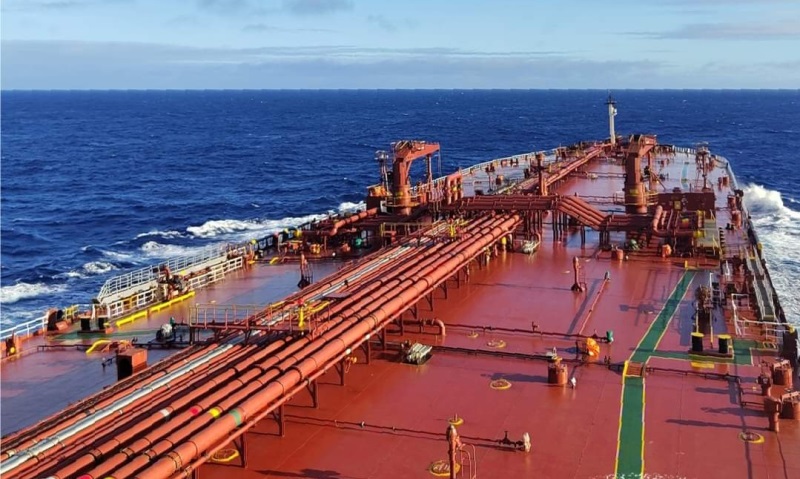
Analysts expect tanker earnings to remain strong as tonne-mile demand rises and floating storage expands
The unwinding of production cuts by OPEC+, coupled with fresh U.S. sanctions on Russian oil majors Rosneft and Lukoil, is expected to keep charter rates for very large crude carriers (VLCCs) and Suezmax tankers at elevated levels. The sanctions are likely to push major importers such as India and China to source crude from alternative markets in the Middle East and Latin America, thereby increasing tonne-mile demand.
According to maritime consultancy Drewry, the strong rally in crude tanker stocks this year has been underpinned by a surge in charter rates, supported by rising oil inventories as OPEC+ ramps up output.
“Sanctions on Russian exporters Rosneft and Lukoil have pressured customers like China and India to scale back imports from Russia. They are expected to replace these volumes with crude from the Middle East and Brazil, boosting tonne-mile demand for mainstream tankers. As a result, charter rates will remain elevated, especially for VLCCs and Suezmaxes,” the consultancy noted.
VLCCs are primarily used to transport crude oil from the Middle East to India and other Asian destinations.
The Baltic Dirty Tanker Index (BDTI) has risen by 47.2 per cent year-to-date, driven by robust performance in VLCC and Suezmax segments. Higher long-haul trade and growing demand for floating storage have lifted VLCC rates above $80,000 per day, while strong trade flows from Kazakhstan to Asia have further supported Suezmax earnings.
Geopolitical tensions add to momentum
Santosh Gupta, Deputy Director at Drewry’s Maritime Financial Research, highlighted that the rally began during April–June 2025 amid the Iran–Israel conflict, which sparked concerns over a potential closure of the Strait of Hormuz.
“This triggered a war premium in charter rates, particularly for VLCCs and LR2 vessels operating on that route. As OPEC+ started to unwind its production cuts, the market tilted toward excess oil supply, increasing the demand for floating storage,” Gupta said.
By October 2025, the number of VLCCs deployed for floating storage had increased 24 per cent compared to January.
With no new VLCC deliveries expected until 2026 and a globally ageing fleet, operators of large crude tankers are well positioned to benefit. “We expect the positive trajectory in crude tanker stocks to continue for a few more quarters, supported by likely oversupply in the oil market and firm charter rates,” Gupta added.
Outlook remains bullish
As global oil supply grows and the post-summer lull keeps prices soft, major importers such as China and OECD nations are expected to continue building their strategic reserves. This sustained stockpiling is likely to keep freight rates firm, particularly in the larger vessel segments.
Furthermore, the weak base of 2024 — marked by subdued Chinese demand — sets the stage for stronger year-on-year growth in 2025. Tight U.S. sanctions on Russian oil are also expected to lift VLCC asset values and boost investor confidence, extending the ongoing rally in tanker stocks.