
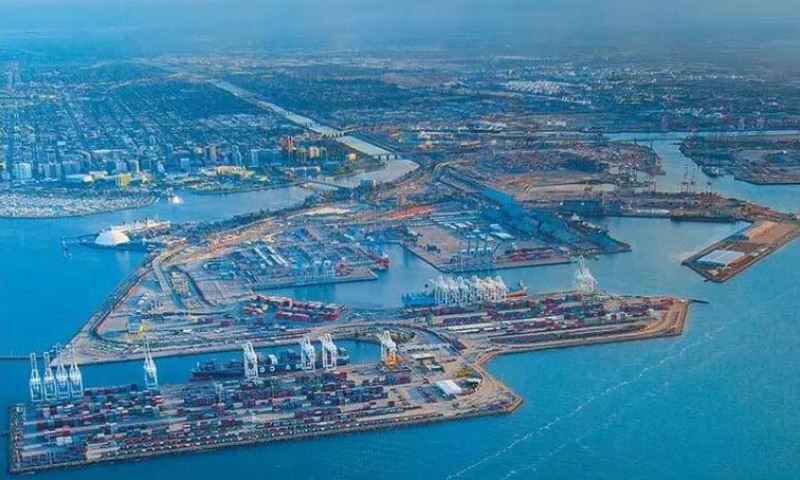
The Port of Long Beach ended 2025 with 9.9 million TEUs processed, up 2.4 per cent from the previous record of more than 9.6 million TEUs moved in 2024.
Imports rose 1.1 per cent to 4.8 million TEUs, while exports declined 5.5 per cent to 1.14 million TEUs compared with 2024.
Empty containers moved through the port increased 6.7 per cent to 3.96 million TEUs.
The port is positioning itself as a Port of the Future, driving innovation and investing in new infrastructure to double cargo throughput by 2050, according to CEO Dr Noel Hacegaba, speaking during his first State of the Port address.
While announcing a record-setting 2025 with nearly 9.9 million cargo containers moved with no backlogs or delays, Hacegaba said a newly released forecast shows the Port of Long Beach is projected to move 20 million containers annually by 2050.
“We have 24 years to prepare to double our container throughput and figure out how we’re going to handle all that additional cargo quickly, safely, efficiently and sustainably,” Hacegaba told 1,300 industry partners, community members, and civic and labour leaders gathered at the Long Beach Arena for the State of the Port address.
“We have set our sights on 2050 because thinking big and planning ahead are critical to our collective success. Speed to market is the key to our success and rail connectivity is the key to our future,” Hacegaba continued.
Hacegaba noted that the Pier B On-Dock Rail Support Facility will move cargo containers from ships to trains in less than 24 hours and improve connectivity with inland destinations . The $1.8 billion project is on track for completion in 2032 and aims to triple the volume of cargo moved by on-dock rail to 4.7 million TEUs.
Achieving environmental goals while maximising operations remains a priority as the port explores the proposed development of the world’s first conventional, zero-emissions container terminal.
If approved, the Metro Express Terminal at Pier S would handle up to 1.8 million TEUs annually to serve express vessel services. It would also be equipped with human-operated cargo-handling equipment powered by renewable energy.
“This public jewel, entrusted to us on behalf of the people of this great state, comes with great obligations, to be responsible as stewards of the land, water and air,” said Long Beach Harbor Commission President Frank Colonna during his remarks at the event.
“This is our City, our Port. We hold ourselves to the highest standards of customer service, ensuring our clients, tenants and all port users can move their goods efficiently.”
Predicting trade flows will help advance the Port of the Future through the use of CargoNav, the digital cargo visibility tool that emerged from the Supply Chain Information Highway to track shipments, plan operations and maximise efficiency, Hacegaba said.
Soon, CargoNav will be equipped with a Universal Trucking Appointment System, a one-stop shop partially funded by the governor’s GoBiz office, allowing motor carriers to schedule container pick-up and drop-off at any of the port’s six marine terminals—and eventually across the entire San Pedro Bay.
Late last year, the Los Angeles Board of Harbor Commissioners approved a new cooperative agreement with South Coast AQMD and the Port of Long Beach.