
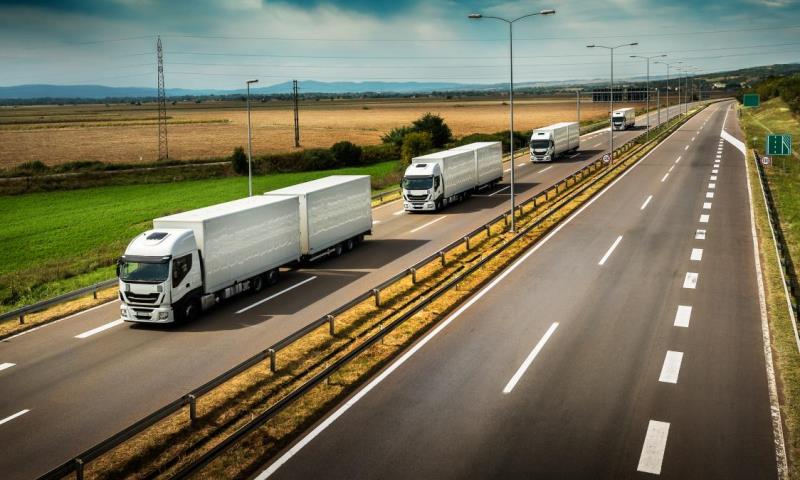
Forwarders and carriers “will have to fight” to stress the importance of decarbonisation to customers still reluctant to pay for it, said Ceva Logistics today. The Path to decarbonisation webinar, by the International Road Transport Union (IRU), noted that trucks and buses worldwide accounted for some 20% of global transport emissions.
But a recent IRU member survey revealed “operators face issues all along the decarbonisation spectrum, starting with their clients not willing to absorb the extra costs, especially in Australia and Europe, and that technologies are largely considered not ready for both of these regions”, said its head of research, Romain Mouton.
Many operators also reported having neither the funds nor incentives from governments to acquire the necessary technologies to reduce emissions, causing a headache for road freight carriers facing stringent regulations.
“The global mood is that transport operators are worried about decarbonisation, even more in Europe where the regulatory pressure is very strong,” said Mr Mouton. “The source of worry comes from seeing their costs go up from using new technologies to lower emissions, as they are met with resistance from their customers to pass on the cost increase.”
He explained that one reason for the lack of willingness to pay was that companies were “often in silos”, whereby a sustainability team is separate to the procurement and supply chain teams, “greatly limiting options to decarbonise”.
Indeed, Sandra Villeminot, global head of sustainability ground and rail at Ceva Logistics, said: “If we ask a customer to commit to us for a higher cost, that’s very difficult to pass. I offer solutions to corporate social responsibility (CSR) teams, but when you go to the tender process, you’re not in front of CSR people, you’re in front of buyers and procurement people and it’s always difficult to make them go for it.”
Further, she explained, most green solutions were “tailor-made”, meaning that each request from a customer required resources in procurement, solution design, and pricing – not only adding to the cost for the customer, but also for the carrier or forwarder.
“This is also a time cost for us that is clearly high. And we need to be smart on where we are proposing green solutions and where we are not.”
Ms Villeminot also noted that implementing internal sustainability initiatives “with no customer behind it” was also a cost.
“So, it’s never profitable, to be clear. You can imagine that internally it’s also very difficult to promote this kind of project. We implement electric trucks for our picking and distribution activities, and we are doing a lot of things, but when you go to your boss and say ‘it’s going to be a non-profitable business’, it’s very difficult,” she said.
However, she said, carriers and forwarders might soon not have a choice, adding: “It is a necessary step to anticipate the regulations that are coming – low emission zones, ETS, and so on.
“If we do not go for this first step and invest now, even if it’s non-profitable, we are pretty sure we will be late when regulation is in place. This is why we are pushing for that.”
And while Ms Villeminot revealed that “the success rate in terms of sales is not at its highest level”, there was “an appetite for this”.
“We receive more and more requests for alternative fuels and low-carbon solutions, which is great. It’s not easy, and we will have to fight for it, but it’s a first step.”