
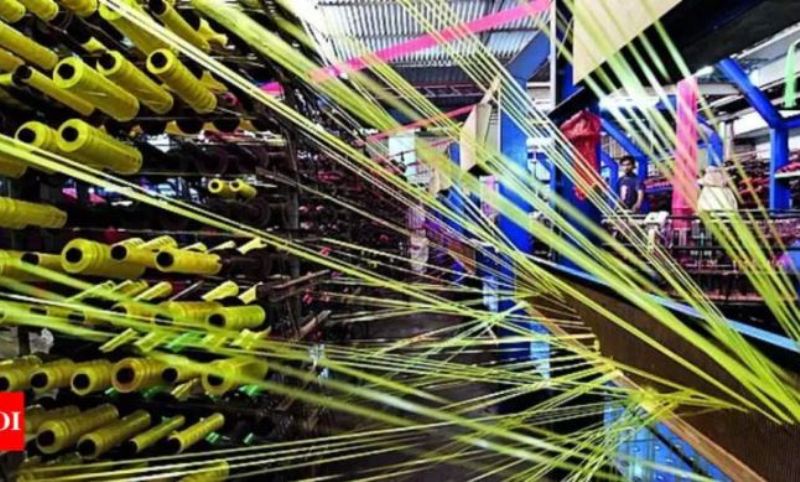
More than 250 grey yarn manufacturing open-end (OE) spinning mills across Tamil Nadu have warned that they will reduce production by 50 per cent from next week unless cotton waste prices are lowered further, according to the Open-End Spinning Mills Association (OSMA).
OSMA President G. Arulmozhi said the sharp rise in cotton waste prices over recent months has severely impacted the profitability of OE spinning mills, which primarily use cotton waste as a key raw material for yarn production.
The association noted that following the Centre’s decision to remove the 11 per cent import duty on cotton on May 31, cotton prices dropped significantly from around ₹195 per kg to ₹172 per kg. However, cotton waste prices, particularly for Comber Noil—a major raw material for OE mills—have declined by only ₹10-15 per kg despite the ₹23 per kg fall in cotton prices.
“For OE mills to remain viable and competitive, cotton waste prices must reflect the decline in cotton prices. The current pricing structure is unsustainable for the sector,” Arulmozhi said.
OSMA stated that if cotton waste suppliers and spinning mills fail to reduce prices further during the current week, grey yarn-producing OE mills across the state will collectively cut production by half from next week.
The association highlighted that the issue extends beyond the 250 grey yarn OE mills and also affects around 350 other OE spinning units that utilise pre-consumer garment cutting waste and recycled polyester fibre derived from PET bottles. More than 100 vendors across India supply raw materials to these mills either directly or through spinning mills.
Grey OE yarn produced in Tamil Nadu is widely used by exporters in Karur and powerloom clusters in Somanur, Palladam, Avinashi and Erode. The yarn is converted into a variety of textile products, including towels, lungies, jeans, bedspreads, nighties, petticoats, T-shirts, socks, kitchen linen, floor mats and cleaning mops.
Industry stakeholders warn that any prolonged disruption in OE yarn production could impact textile supply chains serving both domestic and export markets, particularly products catering to price-sensitive consumers.
OSMA has also decided to seek the intervention of the State and Central governments to develop a long-term mechanism to address recurring volatility in cotton waste prices and ensure the sustainability of the OE spinning sector.