
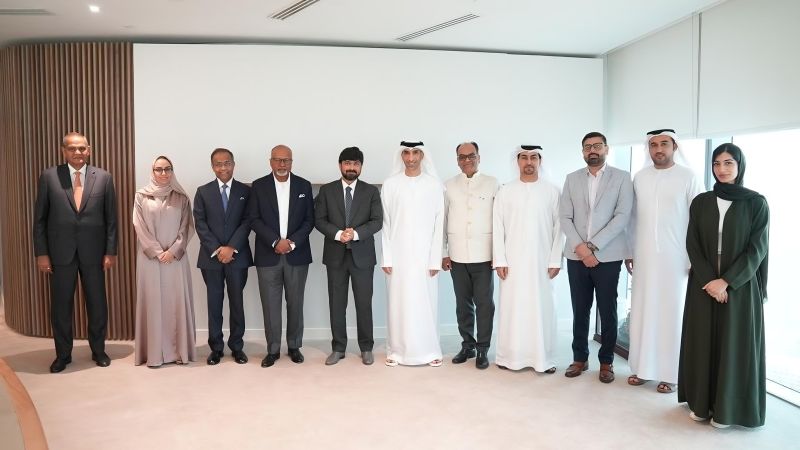
Dr Thani bin Ahmed Al Zeyoudi, UAE Minister of Foreign Trade, met with the Indian Business Council in the UAE to explore new avenues for strengthening economic cooperation and private sector collaboration.
The meeting focused on leveraging the UAE-India Comprehensive Economic Partnership Agreement (CEPA), which came into force in May 2022 as the first such pact signed by the UAE. Since its implementation, CEPA has significantly boosted bilateral trade and investment, opening new opportunities in agriculture, renewable energy, logistics, and entrepreneurship.
Highlighting India’s position as a key trading partner, Dr Al Zeyoudi noted that non-oil trade between the UAE and India reached $65 billion in 2024, marking a 19.7% increase from the previous year.
Several initiatives launched under CEPA were underlined, including:
-
The India-UAE Start-Up Series to help entrepreneurs access cross-border markets.
-
The Bharat Mart project in the UAE to expand Indian exporters’ global reach.
-
Cross-border payment integration to streamline trade transactions.
-
The UAE-India CEPA Council to oversee implementation and unlock future opportunities.
Officials from both nations said CEPA has already delivered measurable benefits, reducing trade barriers, accelerating investment flows, and cementing their roles as strategic trade partners in the global market.