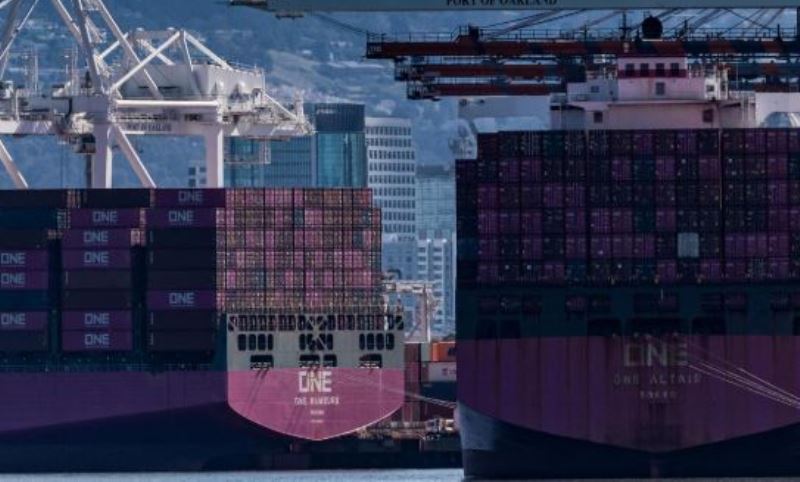
The Trump administration’s plan to revive US shipbuilding by levying hefty fees on China-built or -flagged vessels calling at US ports is running into a hail of criticism from a broad range of US industry groups, including US vessel operators.
Virtually all welcome the idea of revitalising US shipbuilding, but they claim studies show it would cause significant harm to US businesses and the economy.
Yesterday kicked off a two-day session of hearings on the planned charges put forward by the Office of the US Trade Representative (USTR). Following an investigation into heavy state subsidising that had boosted China’s share of shipbuilding from less than 5% in 1999 to over 50% in 2023, Washington wants to curb China’s dominance in the sector and incentivise domestic vessel production.
It wants to impose charges every time an operator with a ship built in China calls at a US port that could reach more than $1.5m per call. In the event of a China-built ship operated by a Chinese carrier that has orders for new vessels to be built in China docking at a US port, the fees could be as high as $3.5m.
Dozens of trade groups and business owners signed up for the hearings, and quite a few of them published their concerns – often backed by new studies of the issue – ahead of the sessions. They ranged from the American Trucking Associations (ATA) and American Farm Bureau to the National Retail Federation and Chamber of Marine Commerce (CMC). Some 317 associations wrote to USTR.
While one commentator described the plan as an “apocalypse for trade”, most took pains to voice support for the goal of reviving US shipbuilding, before pushing their concerns.
“We recommend the USTR proposal be refined to better achieve its intended goals while avoiding any unintended outcome,” wrote Bruce Burrows, president and CEO of the CMC.
World Shipping Council CEO Joe Kramek said: “WSC supports the goal of building a strong and vibrant US shipbuilding and maritime sector. A strong US maritime sector will have positive ripple effects across the entire maritime industry. However, WSC strongly opposes the proposals.”
He said they would “result in increased costs for US exporters and consumers as well as supply chain inefficiencies, while failing to provide China with effective incentives to alter its acts, policies, and practices”.
And he added: “Economic impacts would reverberate throughout the economy, adversely impacting businesses, consumers, and especially farmers who export price-sensitive commodities.’’
He also pointed out that the port fees would go beyond what the law authorised.
The Agriculture Transportation Coalition (AgTrans) added: “First, the 301 Proposed Remedies threaten the very existence of large segments of US agriculture, by denying them the ability to continue to export.
“Second, the 301 Proposed Remedies single out US exports for the most draconian measures, for which compliance is unrealistic if not impossible, and will inflict immediate economic harm on large portions of the country.”
AgTrans cited a number of exports that would “knocked out of foreign markets if these fees are imposed as proposed”, including almonds to India, walnuts to Japan, as well as corn, potatoes, and soybeans among many others.
“It appears no analysis was conducted by USTR as to the price sensitivity of global agriculture trade, the impact of even small additional shipping costs, much less the draconian costs that would be imposed by the million-dollar per ship call penalties. It also appears that no analysis was done as to the fungible nature of the global agriculture trade,” it said.
A study produced by Trade Partnership Worldwide, commissioned by more than 30 organisations, also warned of far-reaching negative effects on import and export prices. Higher costs hitting wholesale and retail trade sectors would result in declining sales and unemployment.
Its authors concluded that the scheme would reduce US GDP and likely worsen the nation’s trade deficit.
The ATA warned that the crippling fees would prompt carriers to restrict US ports calls to one gateway per voyage, causing congestion at those while strangling traffic at smaller ports, which would result in fewer options for exporters, likely hitting agriculture exporters the hardest.
US vessel operators also stand to be hit by the fines, as lack of alternatives caused many of them to acquire ships from Chinese shipyards. The CMC cited research showing that the proposed charges would put at risk $4bn in economic activity and 30 m onnes of cross-border trade and threaten 26,000 US jobs.
Activity at Great Lakes ports would also be hit as importers would ship cargo to Mexico and Canada and use truck or rail from those gateways, it added.
According to maritime consultancy Clarksons, about 83% of containership calls at US ports last year would have been subject to fines under the proposed rules, as well as two-thirds of car-carriers and more than 30% of crude oil tankers.
US vessel operators would be penalised for having acquired ships made in China years ago. They also see little chance of sourcing from elsewhere in the near future. Shipyards in Korea and Japan are reportedly booked-out for years, and it will take a long time for the US industry to become a significant player. Last year, US vessel production accounted for less than 1% of global tonnage additions.
Although the warnings point to a disastrous outcome, few expect Washington to abandon the plan completely, as the new administration views the maritime sector as a pillar of national security, and the president appears to be enamoured with a revival of US shipbuilding.
Most likely the scheme will be reworked to avert the worst repercussions, but will go forward in a watered-down form.
