
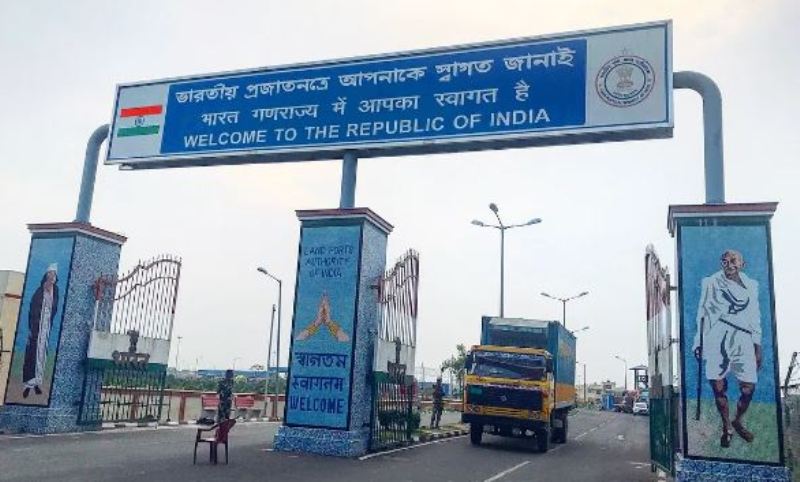
India has imposed significant restrictions on imports from Bangladesh, targeting goods worth Rs 6,400 crore (USD 770 million) annually, nearly 42 per cent of total imports from the neighbouring country. The decision, announced on 17 May 2025 through Notification No. 07/2025-26 by the Directorate General of Foreign Trade (DGFT), marks a sharp escalation in economic tensions between the two nations.
According to a report by the Global Trade Research Initiative (GTRI), the most affected sector is Bangladesh’s ready-made garment (RMG) industry. Garment exports to India, which amounted to Rs 5,140 crore (USD 618 million) between April 2024 and February 2025, will now be allowed entry only through two Indian seaports—Nhava Sheva and Kolkata. This effectively shuts down the previously dominant land-based trade routes, severely impacting logistics and competitiveness.
Other products impacted by the curbs include processed foods, carbonated beverages, cotton waste, plastic items, and wooden furniture, worth a combined Rs 1,270 crore (USD 153 million). These will no longer be permitted through land ports in the northeast and key checkpoints in West Bengal like Changrabandha and Fulbari. However, essential imports like fish, LPG, edible oil, and crushed stone remain exempt from the restrictions.
The move appears to be India’s response to a series of protectionist actions by Bangladesh. Dhaka has recently tightened restrictions on Indian exports—banning yarn imports through five major land ports, curbing rice shipments, and placing import bans on goods ranging from paper and tobacco to fish and powdered milk. Furthermore, Bangladesh has imposed a transit fee of 1.8 taka per tonne per kilometre on Indian cargo moving through its territory.
Indian textile manufacturers have long criticised what they term an “unfair advantage” enjoyed by Bangladeshi firms. While Indian firms pay 5 per cent GST on locally sourced fabric, Bangladeshi exporters benefit from duty-free fabric imports from China and government-backed export subsidies. This gives them an estimated 10–15 per cent price edge in the Indian market, leading to calls for corrective action.
Beyond trade, the issue has strong geopolitical undertones. Bangladesh’s interim government under Muhammad Yunus has taken a notable shift toward China, securing USD 2.1 billion in investments during a visit to Beijing in March 2025. China’s expanding footprint in Bangladesh, through projects like the Teesta River development, has raised concerns in New Delhi over growing Chinese influence in the region.
The GTRI report notes that while India’s response reflects strategic and economic concerns, there remains scope for reconciliation. The deep-rooted historical and cultural ties between India and Bangladesh offer a foundation for future dialogue. As a regional power, India must balance assertiveness with diplomacy to rebuild trust and maintain stability in South Asia.