
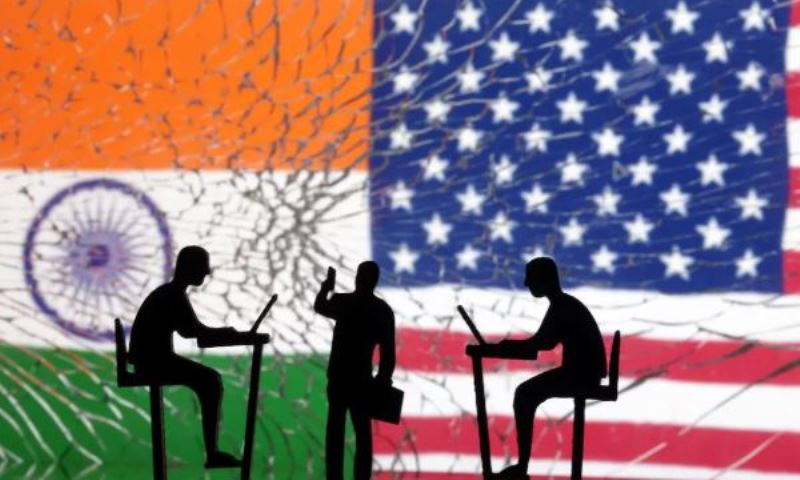
Progress in India–US trade negotiations will remain limited unless Washington revokes the additional 25 per cent tariffs imposed in response to New Delhi’s Russian oil imports, according to a report by the Global Trade Research Initiative (GTRI).
“Negotiations will remain slow unless Washington signals genuine flexibility,” the think tank noted, cautioning that India should be prepared for extended talks.
The comments come as lead negotiators from both sides resumed discussions in New Delhi on Tuesday, marking the first round of formal meetings since US President Donald Trump levied fresh tariffs on Indian products on August 27. These duties came on top of the reciprocal 25 per cent tariffs already in place since August 7. The US delegation is being led by Brendan Lynch, Assistant USTR for South and Central Asia.
Despite Washington’s eagerness for a trade pact, GTRI highlighted that US officials continue to use “critical rhetoric against New Delhi in public forums.” It urged India to stand firm on agriculture and dairy issues, calling them “essential for millions of farmers’ sustenance rather than mere trade matters.”
“The challenge will be how much India concedes without undermining regulatory autonomy or economic sovereignty,” the report added, stressing that meaningful progress is unlikely until the new tariffs are withdrawn.
The think tank also recommended that India formally record its objections and consider supporting US businesses challenging the duties by filing an amicus curiae brief before the US Supreme Court, thereby keeping the negotiation window open.
Talks on a broader Bilateral Trade Agreement (BTA) began in March 2025, with hopes of concluding the first phase by October–November. However, progress has slowed amid India’s opposition to US demands for greater agricultural and dairy market access.
President Trump, in his second term, has maintained a policy of tariff reciprocity, pledging to match other countries’ tariffs with equivalent US duties in order to “ensure fair trade.”