
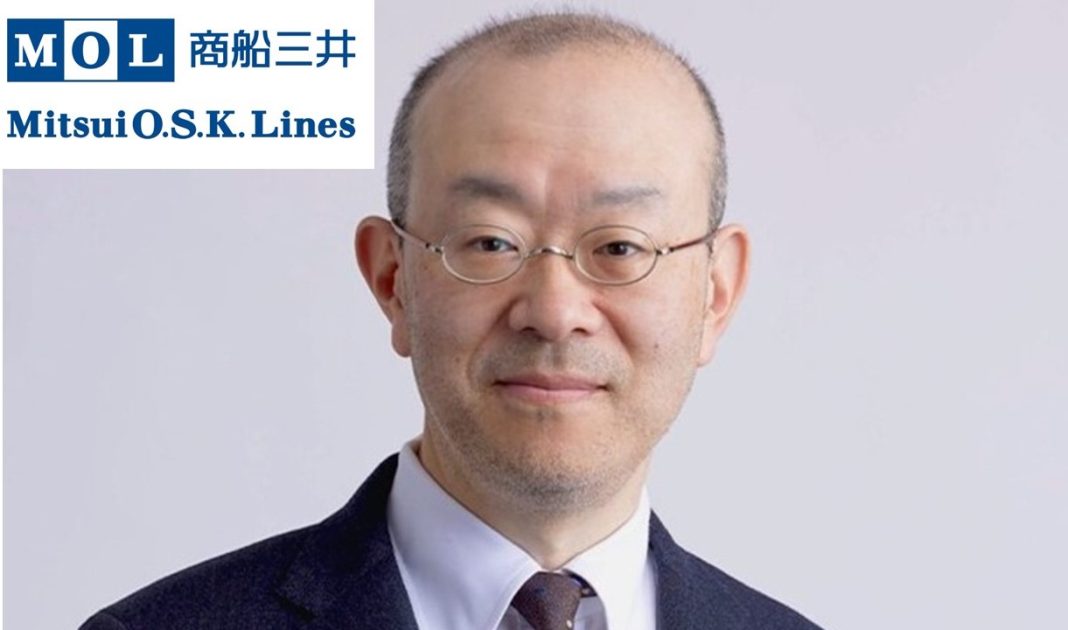
Japan’s Mitsui O.S.K. Lines (MOL), the world’s second-largest ship owner by fleet size, is exploring opportunities to build ships in India while also looking to expand its presence in the country’s automobile export logistics and terminal infrastructure, president and CEO Jotaro Tamura said.
“We are definitely interested in building ships in India,” Tamura said in an interview on Tuesday, adding that the company remains “open and positive” about participating in the country’s emerging shipbuilding ambitions.
MOL currently operates 13 Indian-flagged vessels, making it the fourth-largest foreign ship owner operating under the Indian flag. Tamura said the company sees India as an important long-term strategic market and believes the country could emerge as an additional global shipbuilding hub alongside China, South Korea and Japan.
“Currently, shipbuilding is concentrated in China, Korea and Japan. From a global perspective, it is positive to have another country developing shipbuilding capabilities,” he said.
However, Tamura stressed that India’s shipbuilding sector would need to develop gradually and focus initially on less complex vessel segments before moving into technologically advanced ships.
Referring to the feeder container vessels ordered by CMA CGM at Cochin Shipyard Limited, he described the move as “a good start” but noted that MOL would carefully evaluate the type of vessels suitable for Indian shipyards at the current stage of development.
“You can’t simply jump to very high-specification or technically complex vessels from the beginning,” Tamura said. “I don’t expect Indian yards to compete immediately with high-spec ships built in other countries. Over time, they will develop those capabilities.”
According to him, bulk carriers could serve as a practical starting point for collaboration between Indian shipyards and global fleet owners.
Beyond shipbuilding, MOL is also actively exploring opportunities in India’s automotive logistics ecosystem, including the development of roll-on, roll-off (RORO) terminals and inland logistics services.
In April, Ravi Mehrotra had indicated that MOL was planning to establish a RORO terminal at Bhavnagar Port to support growing automobile exports from India.
MOL currently handles automobile shipments through ports including Mundra Port, Pipavav Port, Mumbai Port, Kamarajar Port and Chennai Port. The company currently commands nearly 50 per cent of India’s automobile export shipping market.
“We are the biggest player in India’s car export transport market,” Tamura said. “Car manufacturing in India is growing, not only for the domestic market but also for exports, and we want to do more.”
He added that MOL intends to move beyond pure shipping services and deepen its role across the logistics value chain.
“To support our customers, it is not just shipping but also domestic logistics, because logistics infrastructure in India still has scope for development. We are exploring becoming more of a logistics solutions provider for our customers, and terminals and inland logistics are areas we want to enter,” he said.
Calling India a “priority” market in MOL’s long-term corporate growth strategy, Tamura also welcomed the Indian government’s decision to extend the subsidy scheme for Indian-flagged vessels by another five years.
“Based on the scheme, we have made progress. So, the extension is positive. It’s good and we want to continue benefiting from it,” he said.
The company indicated that it will continue evaluating opportunities to increase the number of vessels registered under the Indian flag as it strengthens its long-term presence in the country’s maritime and logistics sectors.