
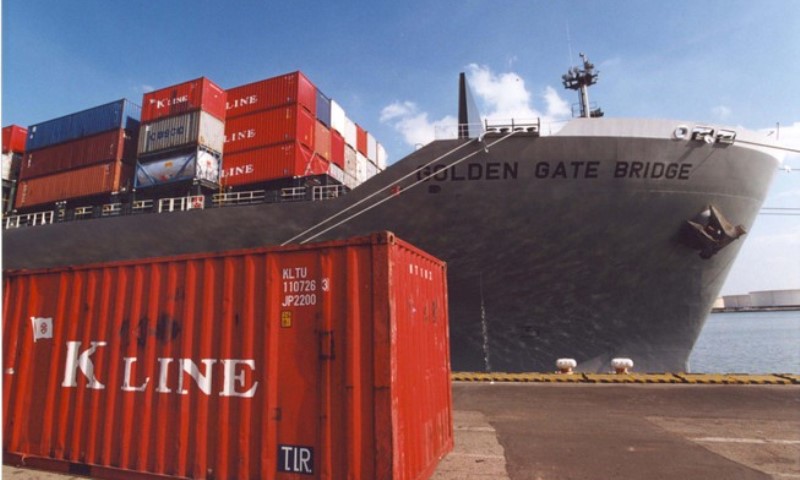
India’s exports to the United States fell sharply across sectors for the fourth consecutive month, registering a 37.5 per cent decline between May and September 2025, according to a new analysis by the Global Trade Research Initiative (GTRI).
The think tank said India’s shipments to its largest export market have been hit hard by steep tariff hikes imposed by the US since April this year. Exports to the US plunged from $8.8 billion in May to $5.5 billion in September, marking one of the sharpest short-term collapses in recent years.
The GTRI study compared India’s export performance between May and September 2025 to gauge the immediate impact of US tariffs that took effect from April 2. The duties started at 10 per cent, rose to 25 per cent on August 7, and further to 50 per cent by late August for Indian goods.
“Smartphones and pharmaceuticals were the biggest casualties,” GTRI said.
Tariff-free items—comprising nearly a third of India’s total shipments—recorded the steepest fall, plunging 47 per cent, from $3.4 billion in May to $1.8 billion in September.
Smartphone exports, which had earlier surged 197 per cent between April–September 2024 and the same period this year, crashed 58 per cent from $2.29 billion in May to $884.6 million in September. Shipments fell month after month—from $2.0 billion in June, $1.52 billion in July, and $964.8 million in August—before hitting their lowest in September. “The reasons for this decline are not known and warrant further examination,” the report said.
Pharmaceutical exports slipped 15.7 per cent, from $745.6 million to $628.3 million. Industrial metals and auto components, which face uniform tariffs globally, showed a milder 16.7 per cent decline—from $0.6 billion to $0.5 billion. Within this segment, aluminium exports dropped 37 per cent, copper 25 per cent, auto parts 12 per cent, and iron and steel 8 per cent.
“Because all global suppliers faced similar duties, the dip here seems driven more by a slowdown in US industrial activity than by any loss of Indian competitiveness,” GTRI observed.
Labour-intensive sectors—including textiles, gems and jewellery, chemicals, agri-foods, and machinery, which together account for nearly 60 per cent of India’s US exports—also took a hit, collectively declining 33 per cent from $4.8 billion in May to $3.2 billion in September.
The gems and jewellery sector suffered the sharpest blow, collapsing 59.5 per cent from $500.2 million to $202.8 million, with GTRI noting that Thailand and Vietnam captured lost US orders, dealing a setback to exporters in Surat and Mumbai.
Solar panel exports too plunged 60.8 per cent, from $202.6 million to $79.4 million, undermining India’s edge in renewable-energy exports. “With China facing only 30 per cent tariffs and Vietnam 20 per cent, India’s competitiveness has sharply deteriorated,” the think tank said.
Other sectors—including chemicals, marine and seafood products, textiles, and processed agri-foods—also saw broad-based declines.
Exporters, GTRI noted, are urging the government to act quickly. “Priority measures include enhanced interest-equalisation support to lower financing costs, faster duty remission to ease liquidity pressure, and emergency credit lines for MSME exporters,” it said.
Without urgent intervention, India risks ceding market share to Vietnam, Mexico, and China, even in areas where it previously held a strong foothold.
“The latest data make one point clear,” GTRI concluded. “Tariffs have not only squeezed India’s trade margins but also exposed structural vulnerabilities across key export industries.”