
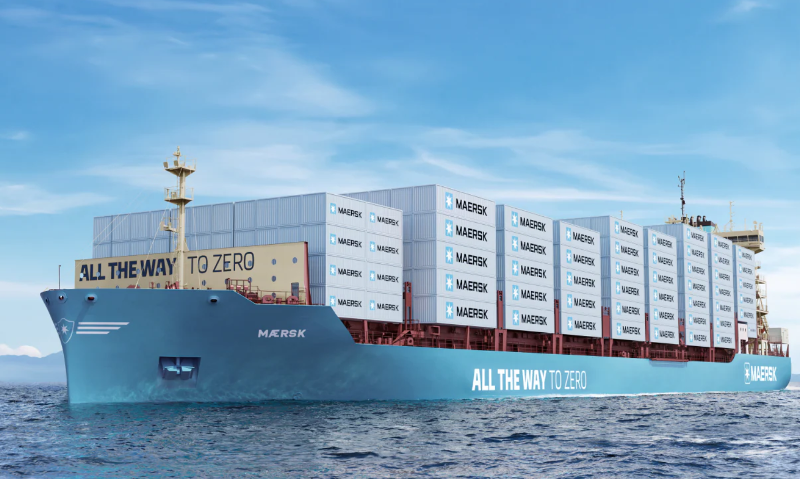
After more than two years of large-scale diversions, global container shipping lines are beginning a tentative return to the Red Sea and Suez Canal, raising hopes of a gradual normalisation of one of the world’s most critical east–west trade corridors.
A.P. Moller–Maersk has confirmed it is redirecting a regular container service through the Suez Canal, marking the first full loop re-entry by the world’s second-largest container carrier since attacks by Yemen-based Houthi forces forced ships to reroute via the Cape of Good Hope. The move signals growing confidence that security risks linked to the Israel–Gaza conflict have eased.
Industry analysts see Maersk’s decision as a key inflection point. “Maersk has generally been the most risk-averse among major carriers when it comes to returning to the Red Sea, so this is a turning point,” said Peter Sand, Chief Analyst at Xeneta. “Even though these are smaller, non-alliance services, the signal to the market is highly significant.”
The service undergoing what Maersk described as a “structural change” links India and the UAE with the US East and Gulf Coasts. A westbound vessel departed Jebel Ali this week, while the first eastbound sailing through Suez left Savannah, Georgia, earlier in the week. Maersk said contingency plans remain in place should security conditions deteriorate, including a renewed diversion around southern Africa to ensure crew safety.
Maersk’s move follows limited transits by rivals. According to Drewry Shipping Consultants, five vessels operated by MSC Mediterranean Shipping Co. and CMA CGM have recently crossed the Suez Canal. Together with Maersk, the top three container lines account for nearly 48% of global container capacity.
Traffic through the canal is beginning to pick up, though volumes remain well below pre-crisis levels. In the week ended Sunday, 26 container ships transited Suez, up from just 10 the previous week, but still far short of the roughly 80 vessels per week seen before diversions began in late 2023.
While a shorter route improves transit times and supply chain efficiency, it also effectively increases available shipping capacity — a development that could pressure already-weak spot freight rates. About USD 2 trillion worth of trade passed through the Red Sea corridor in 2023, according to Clarkson Research Services.
Analysts caution that a full return will take time. Lars Jensen, CEO of Vespucci Maritime, said wider normalisation could begin after the Chinese New Year in late February, with other carriers likely to follow Maersk’s lead. However, restoring global container schedules could take three to five months, according to Xeneta, and will depend heavily on continued regional stability.
The potential capacity surge has already unsettled markets. Maersk shares fell more than 5% following the announcement, while Hapag-Lloyd — its partner in the Gemini alliance — dropped over 3%. Freight rate pressure is expected to intensify as global goods trade growth slows, with Oxford Economics forecasting world goods trade growth of just 1.7% this year, down sharply from 4.9% in 2025.
Still, shipping lines are expected to reintroduce Suez transits gradually to avoid port congestion, reliability issues, and a sharp collapse in freight rates. As Clarksons Securities noted, “The capacity impact is modest, but the signal is meaningful,” even as geopolitical risks — including developments around Iran and the Strait of Hormuz — continue to cast a shadow over a full-scale return.