
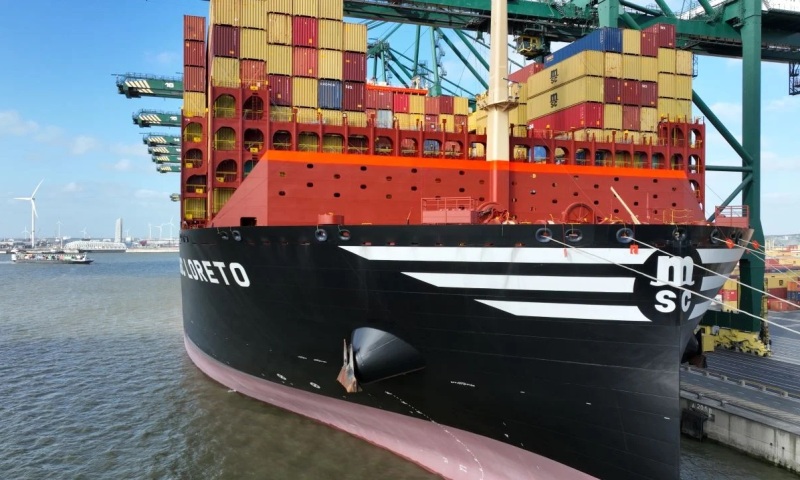
Global container shipping major MSC Mediterranean Shipping Company has announced the inclusion of a new port call at Port of Itajaí in its Gulf–South America East Coast (SAEC) service, strengthening its coverage of southern Brazil and enhancing connectivity for regional exporters and importers.
The revised rotation will see vessels now calling at Itajaí, a key hub in the state of Santa Catarina known for its strong presence in refrigerated cargo, poultry, pork, and manufactured goods. By integrating this port into the loop, MSC aims to offer improved transit options and greater flexibility for customers moving cargo between the U.S. Gulf and Brazil.
The Gulf–SAEC service connects strategic ports across the U.S. Gulf region with major terminals along Brazil’s east coast, facilitating trade flows in commodities such as agricultural products, chemicals, resins, and project cargo. The addition of Itajaí is expected to reduce inland haulage requirements for cargo originating from southern Brazil, thereby improving overall supply chain efficiency.
Industry observers note that the move aligns with MSC’s broader strategy of enhancing direct port coverage and optimizing service networks to better meet evolving trade demands. It also reflects growing cargo volumes in southern Brazil, particularly in temperature-controlled segments, where Itajaí plays a critical role.
With this upgrade, MSC continues to reinforce its footprint in Latin America, offering customers more direct connections, competitive transit times, and expanded market access between North and South America.