
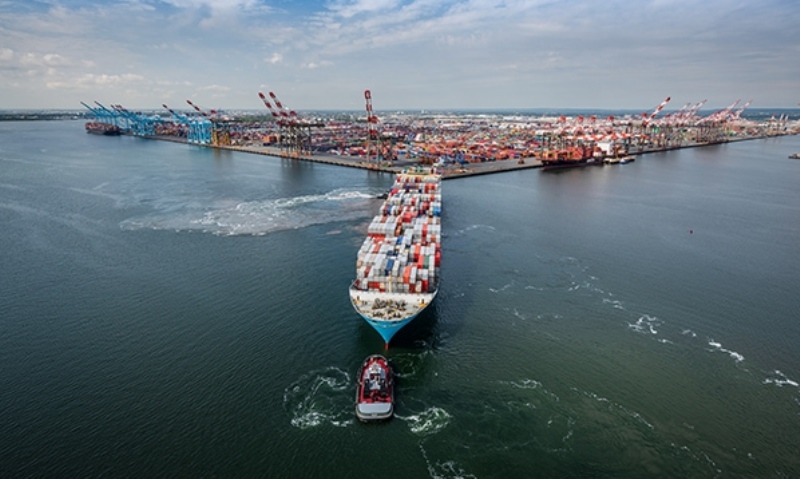
The Port of New York and New Jersey concluded 2025 as the second-busiest U.S. gateway for loaded container volumes, underscoring its continued strength as a critical hub for transatlantic and transpacific trade.
According to year-end figures released by the Port Authority of New York and New Jersey, the port handled a robust volume of loaded imports and exports, maintaining its position among the top-ranked container gateways in the United States. The performance reflects sustained consumer demand, resilient supply chains, and improved terminal efficiency throughout the year.
Officials highlighted investments in port infrastructure, including berth enhancements, expanded on-dock rail capacity, and yard modernisation, which have supported higher throughput and faster cargo movement. The port’s extensive intermodal network also played a key role in facilitating inland distribution across the Midwest and Northeast markets.
Despite ongoing global shipping volatility and fluctuating freight rates, the NY-NJ gateway demonstrated operational stability and strong vessel call numbers. Port authorities noted that continued capital investments and supply chain collaboration remain central to preserving its competitive edge.
The strong 2025 finish further cements the Port of New York and New Jersey’s role as a leading driver of U.S. trade and regional economic activity.