
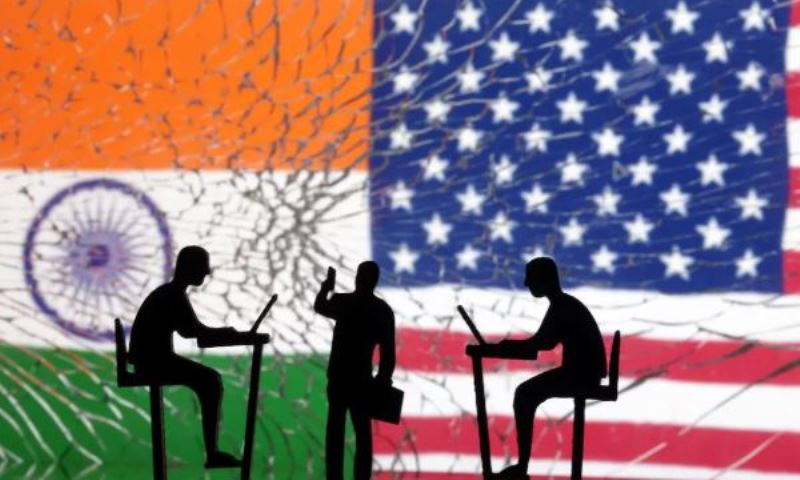
India will hold off on signing its much-anticipated trade agreement with the United States following a landmark ruling by the US Supreme Court that invalidated reciprocal tariffs imposed under emergency powers. A senior government official said New Delhi now wants clarity on Washington’s evolving global tariff structure before finalising any pact.
The proposed agreement, which had been expected to conclude in March, was disrupted after the court struck down tariffs levied under the International Emergency Economic Powers Act (IEEPA). “When the deal was being prepared, the Supreme Court judgment had not come. Now with the judgment, those tariffs per se will not exist,” the official noted.
Currently, the US has imposed a temporary tariff of about 10% on imports from all countries under balance-of-payments provisions, specifically Section 122. This measure replaced the earlier 50% additional tariffs that Washington had imposed on most Indian exports in August 2025.
According to the official, trade agreements must be based on comparative tariff structures and competitive positioning. With the US now working to establish a revised global tariff architecture, India believes it is prudent to wait. “The deal has already been broadly finalised… but the actual signing might be done when the new architecture of tariffs globally is in place,” the official said.
The delay also intersects with ongoing investigations initiated by the US under Section 301 of the Trade Act of 1974 against several countries, including India. While New Delhi has begun reviewing the notices, the official indicated that a final trade agreement could help resolve these disputes.
India’s approach reflects broader global uncertainty following the court ruling. Countries that had already signed trade agreements with the US may need to revisit their terms, as those deals were based on tariff regimes that are no longer valid. Meanwhile, nations such as India and the European Union, which had not yet formalised agreements, are opting to wait.
“There is no stand-off,” the official emphasised, adding that India remains ready to proceed once the US clarifies its tariff framework. The timing, he said, is critical, as trade deals must account for shifting competitive dynamics among global exporters.