
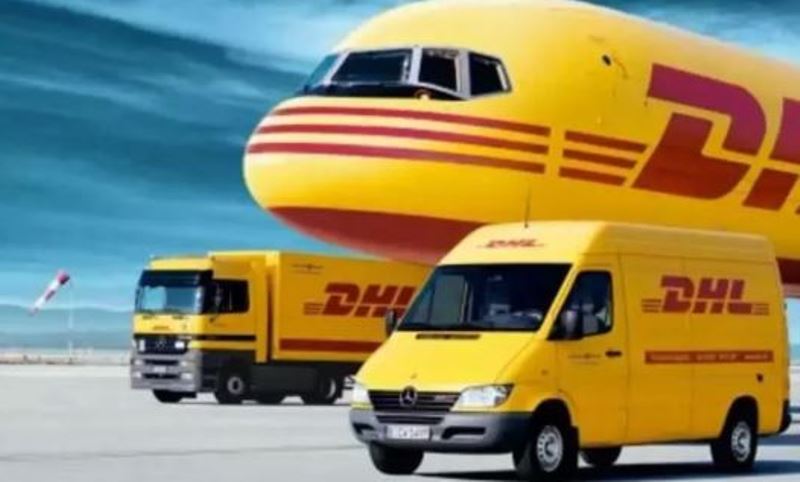
Global logistics leader DHL is increasingly relying on its own air fleet to maintain cargo services as major disruptions in the Middle East cripple the broader air cargo network.
Supply chain operations across key trade corridors have been hit hard by ongoing geopolitical tensions and airspace closures that have dented capacity and complicated routing between Asia, Europe and beyond.
The turbulence in the Middle East — stemming from prolonged conflict and security concerns — has led to widespread cancellations and restrictions at major airports, particularly in the Gulf region, where hubs like Dubai, Doha and Riyadh have seen major reductions in flights.
With an estimated 30% of air freight between Asia and Europe traditionally passing through Middle Eastern carriers and hubs, the loss of connectivity has created a sharp cargo capacity gap. Carriers and freight forwarders are scrambling to secure lift, pushing up rates and increasing charter activity.
To counter this capacity crunch, DHL Global Forwarding has expanded utilisation of its own aircraft, supplementing commercial lift with flights directly operated by DHL Aviation and integrating additional weekly services across key markets. The move helps keep goods flowing — especially on the vital Asia–Europe corridor — while demand remains strong despite airspace constraints.
A DHL spokesperson said the strategy underscores the company’s commitment to reliability and resilience for its customers, noting that internally controlled airlift offers more flexibility amid widening disruptions from the Middle East.
Industry analysts say the shift also reflects broader trends: carriers are increasingly deploying owned freighters and bespoke services to manage turbulence in the global cargo market, as capacity tightens and traditional trans‑Middle East routes remain unstable.
As the industry adapts to ongoing regional uncertainty, DHL’s use of its own fleet illustrates how major logistics players are pivoting strategies to preserve service continuity in a highly volatile market environment.