
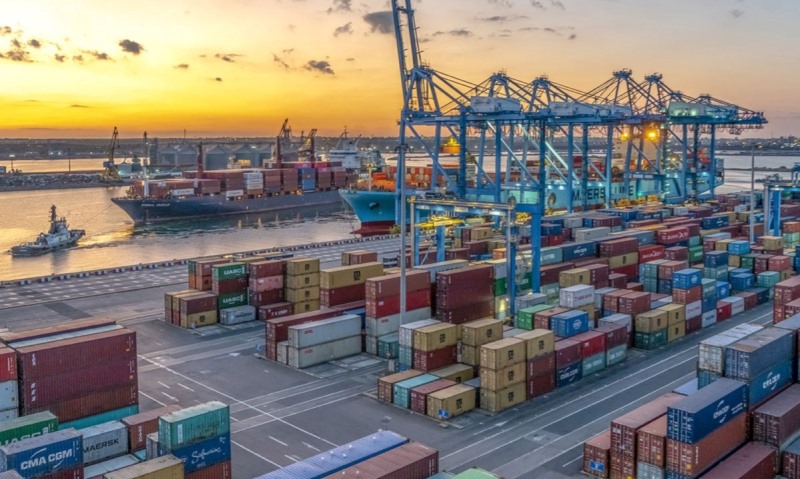
Rising tensions in the Middle East have severely disrupted Afghanistan’s trade and transit operations, with an estimated 2,500 to 3,000 Afghan cargo containers stranded at Jebel Ali Port amid escalating security concerns around the Gulf region and the Strait of Hormuz.
According to the Afghanistan Chamber of Commerce and Investment, the stranded shipments include raw materials for Afghan manufacturing industries as well as commercial imports awaiting onward transportation through regional trade corridors.
Khan Jan Alokozay, a board member of the chamber, said UAE authorities have suspended the loading and transit of Afghan goods routed through Iran because of worsening regional instability. “Currently more than 2,500 to 3,000 containers remain at Jebel Ali port and authorities have ordered that no cargo be loaded because of the unstable situation,” he said.
The disruption comes amid growing tensions involving Iran and Gulf countries, which have intensified concerns over commercial shipping through the strategically vital Strait of Hormuz. Afghan traders warn that continued instability is creating major uncertainty for businesses dependent on maritime transit and regional logistics networks.
Business officials said Afghan traders have also been advised against moving transit cargo through Iranian territory, while mounting storage charges and shipment delays are increasing financial pressure on importers and exporters.
To avoid disruptions, some Afghan businesses have begun rerouting cargo through alternative corridors via Malaysia, Indonesia and India, despite significantly higher freight and transportation costs.
The ongoing disruption is also affecting domestic markets inside Afghanistan, with traders and residents reporting rising prices for food and essential goods because of delayed imports and supply shortages. Economists warn that prolonged instability across regional transit routes could further fuel inflationary pressures and weaken supply chains.
Afghanistan relies heavily on regional gateways including Karachi and Wagah in Pakistan, Chabahar and Bandar Abbas in Iran, and Jebel Ali in the UAE for access to global trade. However, many of these routes are now facing operational uncertainty because of escalating geopolitical tensions and maritime security risks.
The chamber said Afghan traders are increasingly shifting imports through northern transit corridors and Central Asian countries as they seek alternative supply routes amid continuing disruptions in southern maritime channels.