
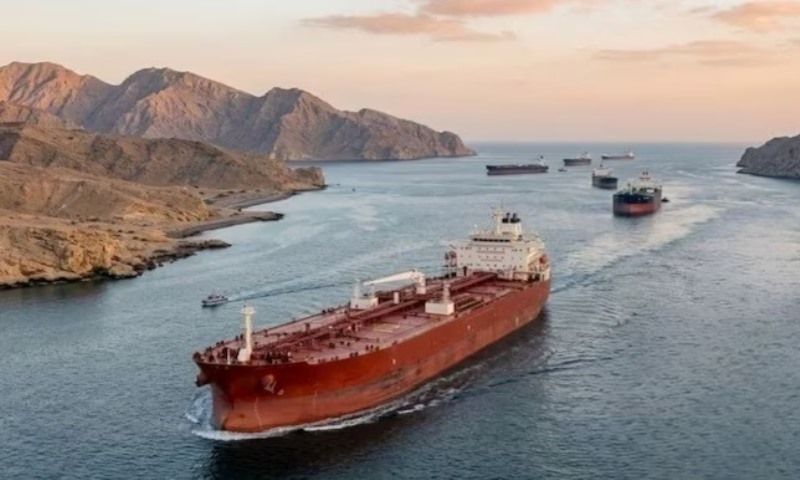
Three crude oil tankers carrying millions of barrels of Middle Eastern crude have exited the Strait of Hormuz with their tracking systems switched off in recent days, according to shipping data from Kpler and LSEG, highlighting growing security concerns and operational disruptions amid escalating West Asia tensions.
Two very large crude carriers (VLCCs) — Agios Fanourios I and Kiara M — each carrying around 2 million barrels of Iraqi crude, transited the strategic waterway on Sunday while operating without active transponders, a practice increasingly adopted by shipowners to reduce exposure to potential attacks.
The Agios Fanourios I, loaded with Basrah Medium crude on April 17, is reportedly heading to Vietnam’s Nghi Son Refinery and Petrochemical complex, where it is expected to discharge cargo on May 26. Shipping data indicated the tanker had previously failed in at least two attempts to cross the Strait of Hormuz before successfully exiting on Sunday.
Meanwhile, the San Marino-flagged Kiara M also passed through the strait with its tracking system switched off. The vessel is carrying approximately 2 million barrels of Basrah crude, though its final discharge destination remains unclear. The tanker is managed by a Shanghai-based shipping company and owned by a Marshall Islands-registered entity.
In another recent movement, the VLCC Basrah Energy loaded 2 million barrels of Upper Zakum crude from ADNOC’s Zirku terminal on May 1 and exited the Strait of Hormuz on May 6. The Panama-flagged tanker later discharged its cargo at Fujairah Oil Tanker Terminals on May 8, according to Kpler data.
Industry sources indicate that ADNOC and several buyers have accelerated crude shipments through the Strait of Hormuz to move oil cargoes stranded in the Gulf due to the ongoing regional conflict. The latest movements reflect mounting concerns among shipowners and charterers over maritime security risks in one of the world’s most critical energy chokepoints.
The Strait of Hormuz handles nearly a fifth of global oil trade, making any disruption to tanker traffic a major concern for international energy markets and supply chains.