
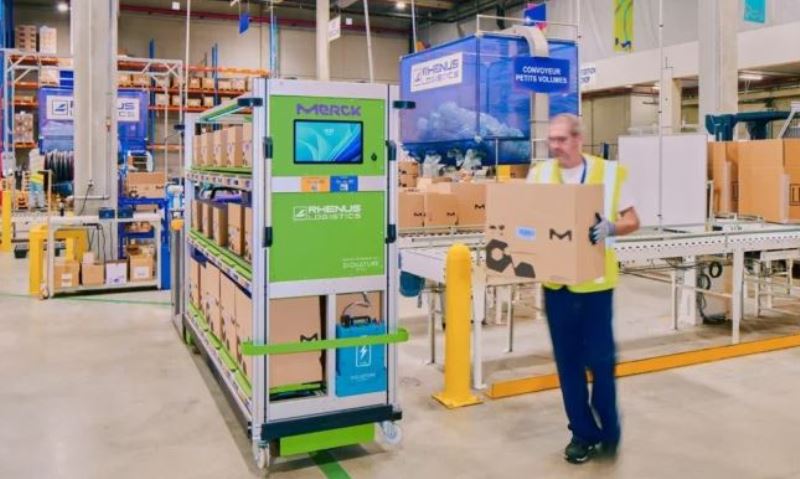
Rhenus Logistics has introduced intelligent picking technology at a Merck logistics facility in France, strengthening warehouse automation and improving the efficiency of pharmaceutical and healthcare supply-chain operations.
The new system is designed to streamline order picking, reduce manual handling and improve accuracy in warehouse processes. By integrating smart technology into day-to-day operations, Rhenus aims to support more reliable order fulfilment and optimise the movement of goods through the facility.
Warehouse automation is becoming increasingly important for logistics providers handling complex supply chains, particularly in the pharmaceutical and life sciences sectors. These operations require high levels of accuracy, traceability and reliability to ensure products are processed and delivered according to strict requirements.
The introduction of intelligent picking technology is expected to help improve workflow consistency and make better use of warehouse resources. Automated and digitally supported picking systems can also reduce repetitive tasks, allowing staff to focus on activities requiring greater oversight and specialised handling.
The solution was developed in collaboration with Signature One, a French logistics technology specialist. The smart trolley combines onboard weighing systems, light-guided picking and digital quality checks, helping warehouse staff verify quantities and reduce picking errors. Cameras also enable orders to be reviewed when additional checks are required.
The Strasbourg hub processes approximately 2,800 orders daily for Merck’s operations in Molsheim, running continuously across three shifts. The new technology is intended to maintain accuracy and service quality in this high-volume environment.
Rhenus and Merck have worked together for 16 years. The latest initiative builds on their collaboration in logistics innovation, following the introduction of a low-carbon transport shuttle powered by B100 biodiesel in 2025.
The next phase will connect the smart trolleys to an integrated order-preparation system covering the logistics flow from truck unloading to final customer delivery. Future integration with conveyors, automated packaging systems and warehouse management tools is expected to further improve operational efficiency.
The project highlights how digitalisation and smart warehouse equipment can help logistics providers improve order accuracy, productivity and reliability in demanding healthcare and life-sciences supply chains.