
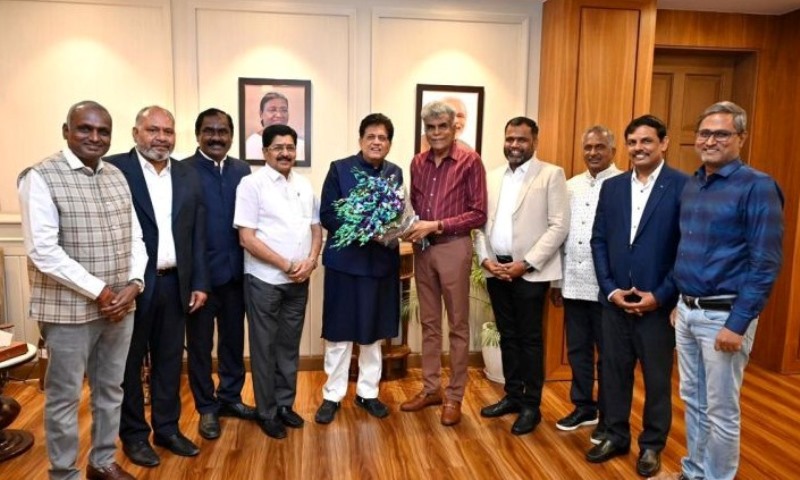
Apparel Export Promotion Council Chairman Dr. A. Sakthivel, along with a delegation from the apparel industry, met Union Ministers Piyush Goyal, Shivraj Singh Chouhan and Giriraj Singh to press for an immediate reduction in cotton import duty from 11% to zero.
The delegation underscored the challenges faced by India’s apparel exporters due to elevated domestic cotton prices and increasing input costs, which they said are affecting the global competitiveness of the sector. The industry representatives noted that the issue has become more critical as India expands market access opportunities through multiple Free Trade Agreements (FTAs).
L. Murugan coordinated the meetings and facilitated discussions between the industry delegation and the Union Ministers on measures to strengthen India’s position in global textiles and apparel exports.
According to the delegation, reducing cotton import duty is essential to ensure adequate raw material availability at competitive prices, support export growth, attract fresh investments, and create employment opportunities across the textile and apparel value chain.
Industry leaders also highlighted that a duty reduction would help Indian exporters compete more effectively with global manufacturing hubs and enable the sector to capitalise on emerging international trade opportunities.