
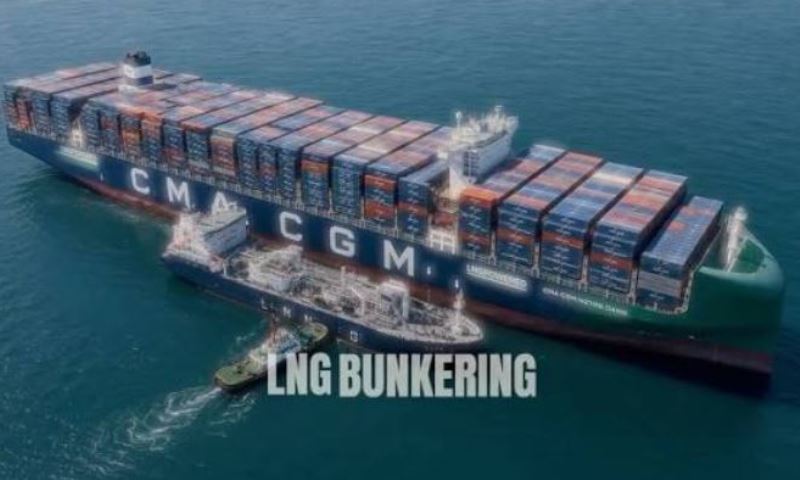
The CMA CGM Group has completed the first bio-LNG bunkering operation for its newest 24,000-TEU LNG-powered container vessel, CMA CGM NOTRE DAME, at the Port of Rotterdam, marking another significant milestone in the company’s decarbonisation journey.
The vessel, recognised as the world’s largest LNG-powered container ship, received 11,125 cubic metres of bio-LNG sourced from biomethane produced using agricultural and organic waste. The operation is among the largest bio-LNG bunkering activities ever conducted globally and represents the largest bio-LNG bunkering operation carried out for a CMA CGM vessel.
Bio-LNG, also known as liquid biomethane, is a renewable marine fuel that can reduce greenhouse gas emissions by at least 67 per cent over its lifecycle compared with conventional fossil-based marine fuels. The fuel also enables shipowners to leverage the existing LNG bunkering infrastructure while accelerating the maritime industry’s transition to low-carbon operations.
The milestone underscores CMA CGM’s commitment to advancing its decarbonisation strategy and supporting the development of Europe’s renewable fuel supply chain for shipping. Rotterdam, one of the world’s leading LNG and bio-LNG bunkering hubs, continues to play a pivotal role in facilitating the adoption of alternative marine fuels at scale.
Commenting on the achievement, Toon Pierré, General Manager, Benelux Cluster, CMA CGM, said the vessel’s port call highlights the company’s long-standing partnership with the Port of Rotterdam and their shared commitment to building a more efficient, innovative and sustainable maritime industry while continuing to provide customers with world-class connectivity.
Beyond its environmental credentials, CMA CGM NOTRE DAME incorporates several advanced digital technologies. Its fully digitalised bridge integrates artificial intelligence, augmented reality and real-time navigation systems to enhance navigational safety while optimising routing, speed and energy efficiency.
The vessel also features an aerodynamic windscreen and intelligent energy management systems designed to improve onboard efficiency, including optimised power consumption for refrigerated containers, further strengthening its sustainability performance.