
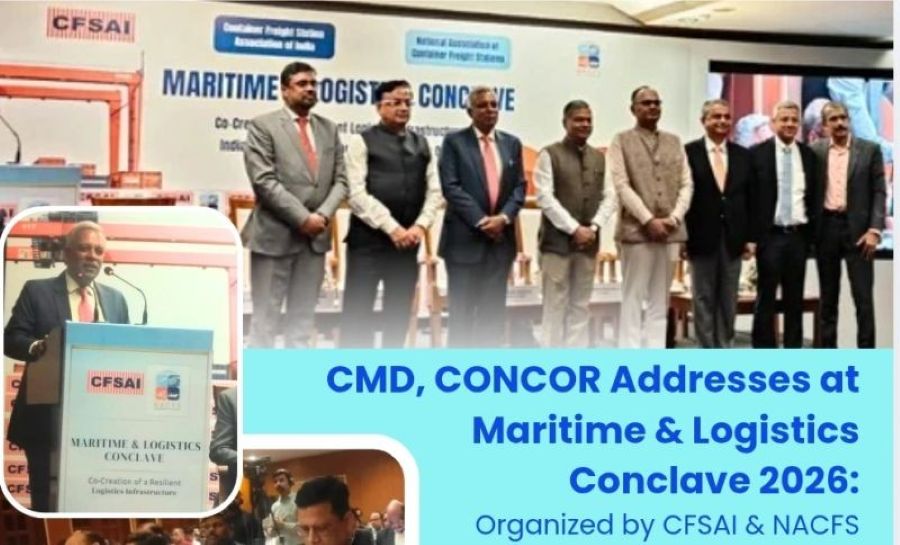
At the Maritime & Logistics Conclave 2026 held in New Delhi, Shri Sanjay Swarup, Chairman and Managing Director of Container Corporation of India (CONCOR), outlined a forward-looking vision for resilient and sustainable logistics infrastructure during a keynote session on “Co-Creation of Resilient Logistics Infrastructure.”
The event, jointly organized by the Container Freight Station Association of India (CFSAI) and the National Association of Container Freight Stations (NACFS), brought together key stakeholders from across India’s logistics and maritime sectors.
Focus on Green Logistics
Swarup highlighted CONCOR’s commitment to reducing its carbon footprint through multiple green initiatives. The company has deployed 230 LNG-powered trucks, supported by in-house fueling facilities at Khatuwas and an upcoming facility at Dadri. He also pointed to a strategic MoU with GAIL for expanding LNG infrastructure.
In addition, CONCOR is accelerating the adoption of electric vehicles, including rail side terminals (RSTs) and trucks, as part of its broader push toward sustainable operations.
Digital Transformation Initiatives
Emphasizing the role of technology, Swarup spoke about CONCOR’s ongoing digital transformation. The company is implementing AI-based systems to optimize terminal operations and improve efficiency. Digital platforms are also being leveraged to streamline processes and enhance ease of doing business for customers.
Expanding Maritime Footprint
Swarup also underlined CONCOR’s growing presence in maritime logistics. The company has recently launched shipping services using its own containers, connecting India with the Middle East and other global markets.
He further highlighted strategic collaborations for port and terminal development, along with the formation of Bharat Container Shipping Line (BCSL), aimed at strengthening India’s position in global shipping.
The conclave served as a platform for industry leaders to exchange ideas on building a more resilient, efficient, and sustainable logistics ecosystem for India’s future.