
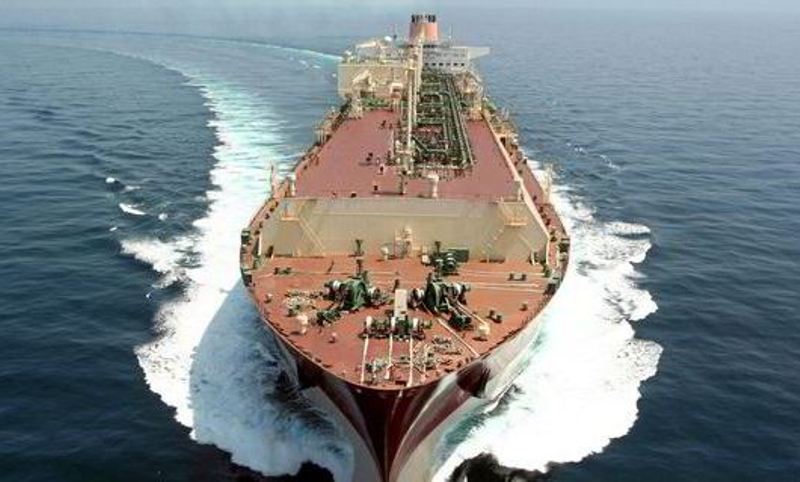
Global seaborne crude oil shipments have declined by 16% since the start of the Iran war, underscoring the severe disruption to energy trade caused by tensions in the Gulf.
According to data cited by BIMCO, shipments have dropped by 7.6 million barrels per day (mbpd) to 38.4 mbpd. Volumes over the past six weeks have also remained 16% lower compared to the same period last year.
The decline is primarily driven by the sharp reduction in tanker movements through the Strait of Hormuz, where transits have slowed significantly following the outbreak of hostilities. The chokepoint is a critical route for global oil exports, and its disruption has had an immediate impact on supply flows.
Before the conflict, the U.S. Energy Information Administration had projected global oil production at 79.9 mbpd for 2026. The current drop in seaborne shipments suggests that nearly 9.5% of expected global crude supply is not reaching the market.
Persian Gulf exports hit hard
Seaborne crude shipments from the Gulf have seen the steepest fall, declining by 12.7 mbpd in recent weeks compared to early 2026 levels.
Some rerouting has taken place:
Saudi Arabia increased shipments via its Red Sea port of Yanbu by 3.0 mbpd
The UAE raised exports from ports located east of Hormuz by 0.7 mbpd
However, these increases have only partially offset losses, leaving a net decline of 9.0 mbpd from the region.
Limited global offset
Other producers have been unable to fully compensate for the shortfall. Global shipments outside the Gulf have risen by just 1.4 mbpd, led by:
Russia (Black Sea): +0.8 mbpd
Venezuela: +0.4 mbpd
India has emerged as a key destination for these additional cargoes, reflecting shifting trade dynamics amid the disruption.
Recovery uncertain
Despite a temporary ceasefire, tanker traffic through Hormuz has yet to recover meaningfully. Ongoing restrictions on Iranian ports and security concerns continue to weigh on shipping activity.
Analysts warn that even if the strait reopens fully, a return to normal volumes may take time due to infrastructure damage, reduced production capacity in the region, and refinery outages estimated at 2.4 mbpd.
The sharp decline highlights the vulnerability of global oil supply chains to geopolitical disruptions, particularly at critical maritime chokepoints.