
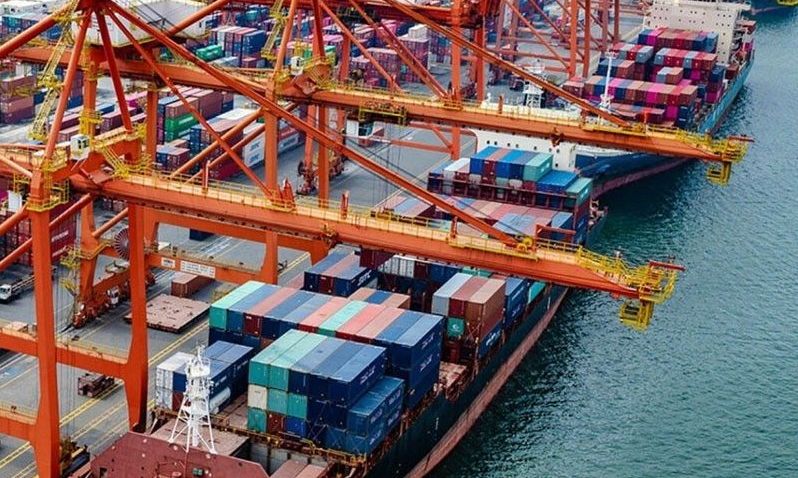
International Container Terminal Services, Inc. (ICTSI) has expanded its flagship Manila International Container Terminal (MICT) fleet with the addition of eight hybrid rubber-tyred gantries (RTGs).
This latest investment enhances terminal capacity, operational efficiency, and supports ICTSI’s ambitious sustainability commitments.
Manufactured by Japan’s Mitsui Engineering and Shipbuilding Co. Ltd., the new RTGs incorporate an 80 kilowatts (kW) lithium-ion power pack combined with a 100kW engine-generator set.
This genset is notably smaller than the 220kW units utilised in conventional Mitsui hybrid RTGs, resulting in significant reductions in fuel consumption and emissions.
Moreover, a regenerative braking system captures and recycles energy to recharge the batteries, delivering notable energy savings and boosting overall operational efficiency.
With the arrival of these hybrid RTGs, MICT now boasts a fleet comprising 18 quay cranes and 60 RTGs — the largest container-handling equipment inventory in the Philippines.
This upgrade forms a vital component of ICTSI’s comprehensive expansion strategy, which includes the development of Berth 8 alongside other key infrastructure enhancements.
These initiatives increase terminal throughput, streamline operations, and enable swifter turnaround times, ultimately improving reliability for customers handling growing cargo volumes.
The acquisition also aligns directly with ICTSI’s long-term sustainability targets, which aim to reduce Scope 1 and 2 emissions per container move by 26 per cent by 2030, with a goal of achieving net-zero emissions by 2050.
Beyond equipment modernisation, the company is actively investing in renewable energy, advanced waste management practices, digital innovations, and other low-emission technologies to reduce its environmental footprint while enhancing operational efficiency.
In June, the MICT deployed two fully electric terminal tractors—the first deployment of such equipment in a Philippine port.